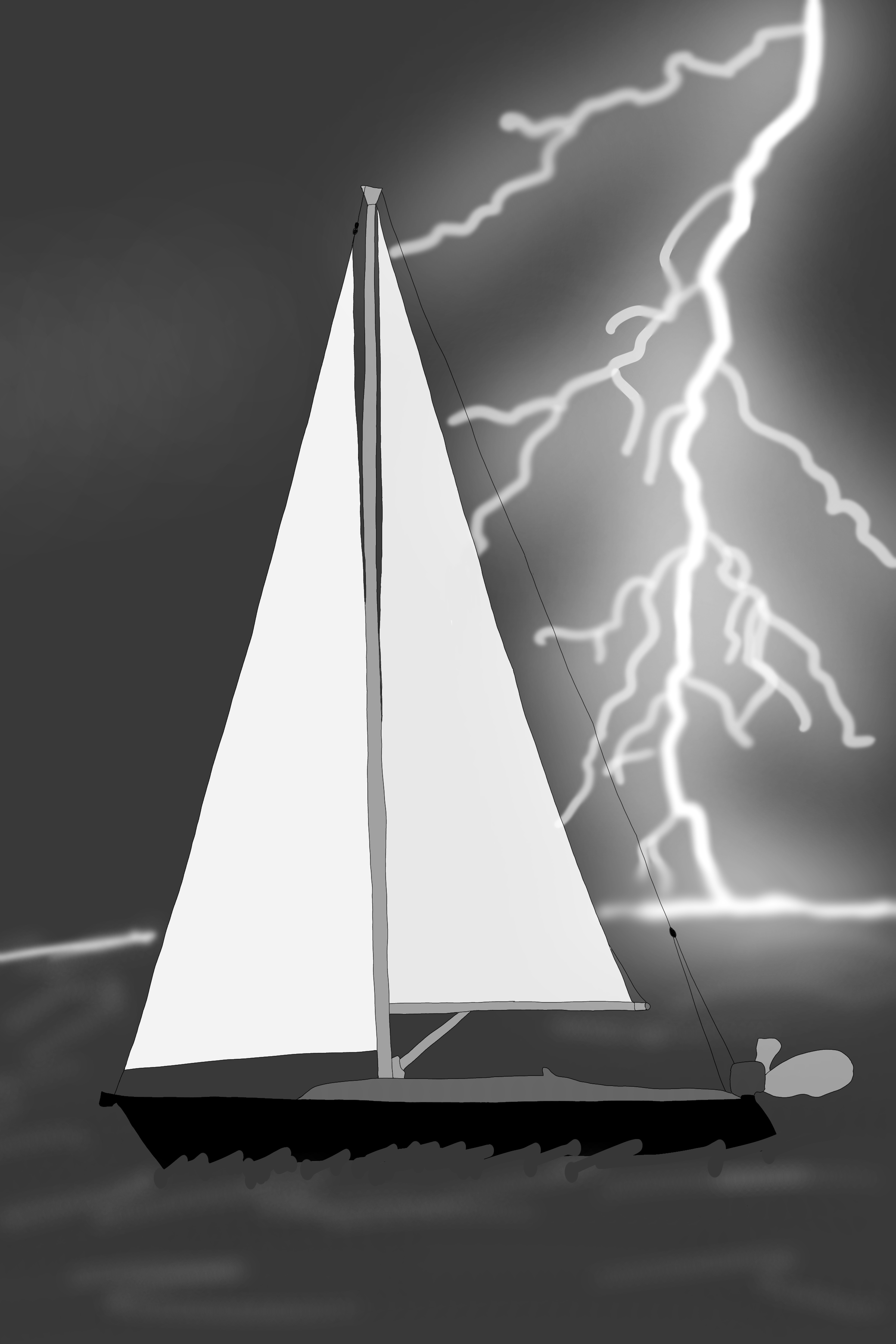
Another Branch of My Publishing Journey Begins with a Cover Reveal!

In 2010 I received what felt like maybe good news… One of my novels had been accepted by a publisher, Lyrical Press. At that time, Lyrical Press was an independent e-pub only publisher. That meant my book would only be available as en ebook. Kindle. Nook. All the other hot items on everybody’s Christmas list.

I consulted friends who had had more luck than me. The consensus was, basically, “Congratulations. At least it’s not self-publishing!” (haha! The worm has turned on that one!)

Lyrical Press did a wonderful job with my book, helping me edit, format, and designing an outstanding cover I will always love. Probably the most of all my covers. Secrets of the Lotus became a real book on July 5, 2010. Shortly after that, Lyrical accepted another of my books, Winter Solstice, which they published in 2011. And a few years later, Lyrical Press became part of Kensington Press, giving me the ability to say two of my books were published by Kensington Press. Pretty cool.

Late last year, however, I realized I wanted to do more with my books. Having taken the self-publishing thing to an extreme, I now own a bookstore, and I want those books on the shelf with my others. I contacted Kensington and they reverted the rights to me. Unfortunately, these rights do not include the original covers, but I have become rather handy with designing covers myself so no worries.

I’ve learned a lot about self-publishing in the past fourteen years. I’m currently putting both books through my own editing and formatting process and hope to have them on the shelf, literally, by summer. I have redesigned the covers already, and I’m getting excited about reintroducing these two stories to you guys.

Congratulations! I’m self-publishing!

I’m a Bookmaker

I often get questions about getting published. My answer?

I have no clue. I’m definitely not an expert.

But you’ve been published. Look at all those books. And you publish a literary magazine.

And I do. And I admit I’m a little surprised when I look at my backlist. Because, yes. I have a lot of published books. And I’ve learned a lot about how to publish them. I know how to format a manuscript, how to upload it to Amazon and Smashwords, I’m usually able to edit my own stuff, and I’m slowly learning the ins and outs of designing my own cover and illustrating my books when necessary.

I try, very hard, to explain that my path to being published isn’t really going to work for everyone. I’m self-taught, but I know my limits and I know when I need to consult an expert. I’ve hired developmental editors, for example, because I know that’s not my field of expertise. I often hire someone to design covers for me, or at least I used to, back when I wrote novels. If I ever write another one, chances are I’ll hire someone for that, too.

With all that said, I have one bit of advice for new writers who want to self-publish. Don’t go to a self-publishing publisher. Do as much as you can yourself. And take an a la carte approach to the rest. Chances are very good if you go to a publisher who charges you to publish your book, you’ll be overcharged and your book will not be a quality product. You’ll make less on royalties from your book because the publisher will take a cut, and you’ll be overcharged for author copies of your book, making it difficult to sell them yourself and make a profit. (I know books are overpriced, but nobody really wants to pay $20-plus for a paperback book.)

And so…I’ve finally broken down and put all my knowledge into a short (about four and a half minutes) presentation. I may eventually start giving this presentation in person, but I’m not a great public speaker except when it comes to reading my poetry (and so far nobody’s wanted to pay to hear that). Plus, as I said, I don’t really consider myself an expert.

But I am a bookmaker.

Sum total of my knowledge about bookmaking, also available here: https://michellegflye.com/self-publishing-from-a-bookmakers-pov/

It’s kinda funny, actually.

Yesterday I saw a sign that said “Live like someone left the gate open.” It summoned to mind a dog running like crazy, sniffing everything he’d never been allowed to sniff, peeing freely wherever he wanted. Yeah, it’d be nice to live life that way.

Today, I saw a meme of a sign that read “Whatever you do today, do it with the confidence of a 4 year old in a batman t-shirt.” And I thought, yes. That’s what I need to do.

I’m a writer.

That does not mean I’m famous.

The publishing world is not designed for people like me. I know this. I am nothing but a middle-class white woman who hasn’t had any real hardship in her life. There’s nothing remarkable about me to make me stand out from the crowd.

I am everywoman.

I can string words together, sometimes even brilliantly. I know the basic rules of grammar (don’t ask me about who/whom though) so I can edit my own work and there won’t be any egregious errors. I also have a pretty decent vocabulary—hence egregious.

I’m a good writer, but I’m still everywoman.

I remember how excited I was when my first book was published. It was a good little romance. I still think it is. I’ve gone back and re-read it without flinching. Much. It was traditionally published by an ebook publisher. In fact, it came out in July 2010. It’s been out for thirteen years.

I’m still not famous.

Since 2010, I’ve had two more traditionally published ebooks (both romance). But I have self-published ten romances, a romantic fantasy trilogy, two children’s books, a young adult book, a comic book, and most recently, seven books of poetry.

Somebody left the gate open.

So here I am, a self-published, relatively unknown writer, frolicking along on the roadside where I’m not supposed to be, publishing books like I’m a 4-year-old who believes fiercely that I can become a superhero—or at least pee anywhere I want to. To make it even better, I now own a bookstore and I try my best to encourage people to try other writers than those embraced by the publishing world.

Because there are more stars out there than those you see at first glance. Some of us just aren’t given the opportunity to shine.

Are you sure you wish to hear my tale? It’s really only about me.

From “Han River” by Michelle Garren-Flye
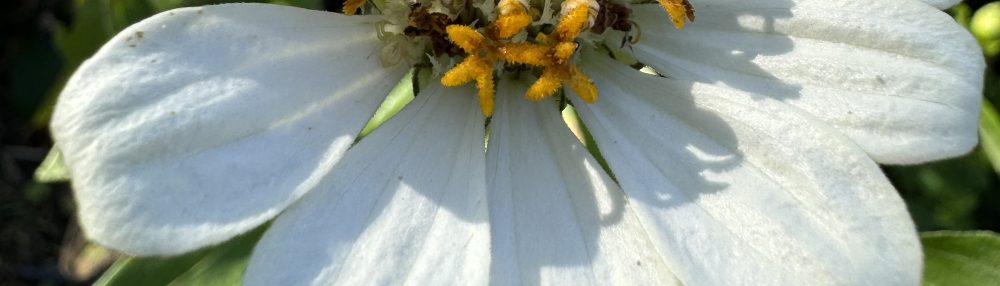
Just a dandelion, really. Photo by Michelle Garren-Flye. Copyright 2023

Bookbuilding: How it all falls together

It’s been a bit since I last updated. I’m busy busy getting Learning Curve finished up. Sometimes it amazes me how synchronous bookbuilding can be. I set out to write fifty villanelles. Actually, I set out to master the art of the villanelle, which is an accomplishment in itself. During the course of writing villanelles, it occurred to me that I could make a book out of them. It also occurred to me that two of my previous poetry books were actually the beginning of a series that Learning Curve could continue.

Synchronicity, man.

And now I’m putting together Learning Curve, and synchronicity seems to be more a factor than ever. I didn’t write the villanelles with any sort of organization or sections/chapters in mind. And yet, they seem to be dividing themselves up perfectly in groups of ten. Almost perfectly, anyway.

For me, this part of bookbuilding takes some time. I have been drawing all along while writing villanelles, and many of those illustrations are finding their way into my book. But I’m also drawing special illustrations for some of my poems. I’m putting together each page separately, just as I’ve done for past books, but I think I’ve gotten better at it.

Plus, it’s been very synchronous.

One of the illustrations from Learning Curve. Copyright 2022 Michelle Garren-Flye

New poetry book announcement: Far & wee (with excerpt—sort of)

Cover copyright 2022 Michelle Garren-Flye

So you’ve been with me from the beginning of this thing. May 21 doesn’t seem like that long ago, right? What is that, 19 days?

I never would have thought in a million years that I would write, illustrate and publish a book in nineteen days. But I did.

I’ve often felt that I write what is given to me from…somewhere else. I write for someone else and there’s a purpose I don’t necessarily know about for my writing. I don’t know who it is out there who needs to read this book, but it’s here now. It was my obsession, pushing everything else out of the way for 19 days. Now I need to move on to finish up some other projects. Projects that took me longer than 19 days. But I think I can do it now.

Anyway, as a little introduction/excerpt to the book, here’s the actual introduction of the book as it appeared on my computer while I was laying out the book.

Copyright 2022 Michelle Garren-Flye

Buy local: Support independent authors

Studies show that buying local is important to local economies, right? More of the money you spend returns to your own local economy. Did you know buying from an independent local author has the same benefits?

Authors published by large publishing companies get much less of the profits from sales of their books. Therefore, the majority of the money you spend on a bestseller in the bookstore goes national, not local. However, if you buy a book that is independently published or published by a small press, the author gets much more of their proceeds. Therefore, more of that money returns to your local economy, growing local businesses and

True, you may only be able to find independently published books at online retailers, meaning part of your money goes to support those retailers. However, this pales in comparison to the portion of money that goes to traditional publishers. The average traditionally published authors makes, on average, a ten percent royalty, but this is on net profit, so any discounts or overhead are taken out of the proceeds before the author gets a check. So an eight dollar book does not make the author eighty cents per book sold.

By contrast, independently published authors (read self-published here), can make up to a seventy percent royalty on a book. Usually independently published books sold in ebook format online are priced much lower than traditionally published ebooks (mine range from free to $2.99). Paperbacks can be more expensive because, at the moment, they are print-on-demand, which means there are no warehouses full of my books anywhere. I keep a few on hand for promotional purposes, but basically, if you order a physical copy of my book, somewhere a press fires up and prints it off.

It’s kind of cool to think of that.

In truth, though, you as a consumer have the chance to change the way books are made. You can go into a bookstore and suggest that they carry my books. The bookstore could then contact me and we could haggle out a price, which would result in me shipping them a few copies of my books, which would then share brick-and-mortar shelf space with traditionally published books. In most cases, larger chains are less likely to do this than the independent book stores which are, sadly, becoming fewer in number.

Consumers can change that, too.

So, buy local. Chances are good that no matter what subject matter or genre interests you, there’s a local author who’s got it covered. Please feel free to list your favorite independent author’s website in the comments.

Plastic fiction: What happens when writers give up on soul

Three years ago, Ursula K. Le Guin gave an impassioned speech in which she basically implored writers to write what they wanted to write and not what the publishing industry told them to write. She asked that literature in all forms return to being considered an art form. “Books aren’t just commodities,” she said.

I’ve often wondered if I would sell out if someone offered me the opportunity to sign with a big publisher that would basically guarantee my book would be a bestseller with an awesome marketing plan and everything all taken care of—but I had to write a book the publisher wanted with the plot all spelled out for me. Would I do it? Would I sell out? Would I turn out a plastic fiction book with no soul and no art just to gain readers?

I can’t answer that question. I fear I might. It’d probably be easy enough to write if I didn’t have to come up with the plot myself. And I have a respectable backlist now. Surely I should consider that in the equation. If I gained lots of readers with my plastic fiction—readers who enjoyed my style of writing and who would then consume my other books—wouldn’t it be worth it? But then, too, I’d be feeding the plastic fiction industry that has taken over the publishing world and made it more difficult for writers to be the artists they are meant to be.

Not sure you know what I mean by plastic fiction? Oh yes, you do. It’s especially prevalent in my chosen genre at the moment. For a while it was vampire romances (which has now morphed to include werewolves and shapeshifters and lots of other paranormals). I’m not saying these are all bad. I’ve even read a few that are exceptionally good. But those can be hard to find. And then there’s the fifty-shades phenomenon that is reflected in everything from content (way more explicit than just a few years ago) to covers (haven’t you noticed the trend to monochromatic still life since Christian Grey’s silk tie?).

I think the surge in independent publishing has been a reaction to writers trying to avoid the plastic fiction publishing industry. I’m proud to be a part of that surge. I love what I write, and I love publishing my little bits of art. They aren’t the highest quality—maybe they’re made of aluminum instead of gold or silver—but they aren’t plastic, either. I know this because they come from my heart and contain bits of my soul.

My Least Favorite Word

Yesterday I had to face facts. My work-in-progress was done. I had written it. I had rewritten it. I had rewritten it in third person. And then I had gone over it again with a fine tooth comb. If there’s a single typo in the whole thing, it’s a miracle.

So then I had to make a decision. I’m a pretty good hand at self-publishing now. I know how to make some covers myself and I know who to call for others. I could publish this story (which I’m really excited about) and have it out there for public consumption by the end of the year, including marketing. Or I could submit.

God, how I hate that word. Submit. Submit to the inevitable. Submit to the machine. Submit to your fate.

Submit to a publisher.

I’m not saying publishers are bad. In truth, the two or three I’ve been fortunate enough to work with have been awesome, actually. It’s fantastic having a professional editor go over my book and point out its weaknesses. I thrive on deadlines. I love what an editor can wring out of me that I didn’t even know was there. Like a washcloth you thought was dry until you really put the pressure on.

Still, I haven’t submitted to a publisher in more than a year, and yesterday, as my cursor hovered over the “Submit” button, I knew I was submitting to something else. Loss of freedom. I love this story. I could do a good job putting it out on my own. I could have a real hand in designing the cover. And since it’s the first of three books, if it’s accepted, I’m submitting those other two as well.

image

But I know a publisher can offer this book much more visibility than I can do on my own. Not to mention that ever elusive validation that we as writers are always looking for. I mean, sure, I love the story. But if a publisher likes it enough to put their resources behind it, well, that’s validation.

So, I submitted. To my fate, to the inevitable, to whatever the future holds. And if this publisher doesn’t like it, I’ll make a decision then about what to do with my story. Another publisher? Self-publishing? Trunk novel?