#AmWriting: What it means to me

mountains nature arrow guide

If only there were a sign that pointed the way. Photo by Jens Johnsson on Pexels.com

You’ve probably seen the hashtag #amwriting before. On Twitter, Facebook, Instagram. I don’t use it very often because if I’m on Twitter, Facebook or Instagram, I’m actually not writing. I’m putting off writing. I’m distracted. I’m looking for a way to get out of writing.

I’m procrastinating, and, as my high school chemistry teacher always said, “Procrastination is the thief of time.”

Today, for instance, I #amwriting. I’m writing guest blogs and interviews for other people as part of my ongoing blog tour for Becoming Magic with Goddess Fish. Meanwhile, my novel writing is at a bit of a crossroads. I have started and stopped several times on my new project. Nicó and Brooke (the heroes of my newest untitled project) have been left wondering what’s to become of them. And poor Galen and Frankie from Magic at Sea! I left them way back last October to finish rewriting Becoming Magic and then realized I needed to write Dickens Magic if I wanted it out before Christmas this year.

Well, Kate and Alex from Dickens Magic are all set. Now I’m torn between the two stories I’ve started, and I have to pick a direction. Or I could always go back to finish up Jack and Kaelyn’s story in Timeless. At least that one’s written. I just have to edit and rewrite and edit again.

That’s what #amwriting means. I #amwriting. I just need to pick a direction. And quit feeding the procrastination thief!

When the creative flame burns low

lighted candle

Photo by Rahul on Pexels.com

It’s not writer’s block…exactly. I can still write. It’s just that the past few days have been very emotional in my family, and for the first time this summer, I actually don’t feel like writing.

My creative flame has turned from a roaring fire in my breast to a flickering candle flame. So I’m using the time as wisely as I know how. I’m proofreading and fixing what I wrote this summer while my fingers burned with creative fire. And every now and then, maybe I’ll dash off a poem if the spirit moves me.

And I’m promoting! Becoming Magic is making the rounds on the internet right now. I’m over at Lisa Haselton’s Reviews and Interviews today talking about what makes my hero Connor especially charming and what’s next in my “new kind of romance.” I hope you’ll join us and while you’re there, enter the drawing for the $50 gift card to Amazon or Barnes & Noble.

And no worries! The writing flame will get stoked at some point soon. And I’ll be off and writing in a mad dash once more. I just have to be patient and feed the tiny flame until then.

The Next Chapter: Moving a Friend Away

white car traveling near trees during daytime

Photo by Tim Gouw on Pexels.com

This weekend, I helped a friend move five hours away. It was tough. Setting him up in his new place and knowing I could no longer see him every single day. Of course, the move is a good one for him. More opportunity for growth and friendships and education.

Yes, I joined the ranks of parents leaving their first-born at college. I know it’s a good thing, but I couldn’t help but think that I would miss him fiercely, this baby-turned-man in a blink of an eye. He’s always been a part of me and always will be, though, so I square my shoulders and march on.

After all, I’m not losing a son or a friend. I’m helping him be a better man and friend to others.

Turning to other things, I have a GoodReads giveaway going on now! Enter to win one of fifty copies of Becoming Magic here: Becoming Magic GoodReads Giveaway. Also, I’ll be at Lisa Haselton’s Reviews and Interviews on Monday morning promoting Becoming Magic, so be sure to join me there. Plus, there’s a giveaway!

Poem: Thoughts and Prayers by Michelle Garren Flye

Don’t miss my GoodReads Giveaway for a Kindle copy of Becoming Magic! 

Thoughts and Prayers

By Michelle Garren Flye


I prayed for you.

You were in need, so I prayed.

I didn’t speak up.

I didn’t help.

Is it my fault He didn’t answer?

It can’t be; I prayed.


I thought about you.

I knew what was happening,

And I didn’t take action…

Or responsibility…

It’s not my problem, it’s yours!

So thoughts are enough.


The pain is outside.

I see it through my window,

But I don’t open it!

I pray and I think.

If I open my window or, God forbid, my door!—

The pain may come in.


And then I’ll know.

My friends may pray.

They may think all day.

A Nation may send me thoughts and prayers—

And I’ll watch them float by—

Dandelion fluff on the wind.

dandelion nature sunlight

Photo by Nita on Pexels.com

The Right to Write, the Right to Speak—for others and ourselves

person with body painting

Photo by Sharon McCutcheon on Pexels.com

If you have read my blog recently, you probably saw my firm opinion about The Nation editors apologizing for publishing a poem written by a white guy in Black vernacular (AAV, AAVE, whatever). I believe—still—that the poet has the right to write (and publish that writing) for other races, so long as he does it well. I haven’t actually seen anyone critiquing the poem saying the vernacular was used incorrectly. Mostly it’s been woke white people saying a white person shouldn’t use it at all.

Moving on from that, however, I was thrilled to read an article in The New York Times entitled “Go Ahead, Speak for Yourselves” written by Kwame Anthony Appiah. I have no idea if Mr. Appiah supports the right of Mr. Carlson-Wee to write in Black vernacular or not. However, I liked his take on representing for different cultures. It seems these days that we’ve simplified things a little too much. We’re “woke”, so Black people speak for Black people, gay people for the gay community, and white women for white women.

But what do I—a middle class suburbanite raised in a lower income household—know about a white woman raised on a farm? If I express an opinion “as a white woman”, does it represent everyone from my retired next-door neighbor to my daughter (who is very different from me and will, by the time she is my age, have had very different experiences throughout her life than even some of her peers)?

As a writer, I feel the limitations of this. I strain at the bonds of being a Southern white woman forbidden to write or empathize with other cultures, even when I do my best to learn about and experience those cultures. It’s a multicolored world and we all have a portion of that rainbow in us, whether we’re Black transsexuals or white Southern GRITS or straight Mexican men. I believe if we all learn to embrace that rainbow and take more of it into ourselves, we will grow not only as individuals but as a united human race.

That’s why I stand up for Mr. Carlson-Wee’s right to write and empathize with a race he did not grow up in, even when he and his editors did not. That’s why I will continue to write from the perspective I am drawn to, regardless of what color that person’s skin is. I hope someday I will have the skill to write from the perspective of someone who is truly different from me. I will keep working toward that goal, improving and expanding the boundaries of my empathy.

Because that’s what writers do.

Poetry-gate and what it means for writers

I have been taken to task—and found wanting.

No kidding, friends. We are never finished learning, are we?

I will not and do not apologize for my last post. I still support Anders Carlson-Wee’s right to write what he feels. And if he can get it published, more power to him. I do not believe that the poem he wrote was in any way intended to be disrespectful to another culture. I believe it was written for those of us who enjoy white privilege and good health and plenty to eat.

However, I now see the problem. It was written by a white guy in good health with plenty to eat.

Before you say, “But Mark Twain!” (as I did), look at it this way. There are plenty of black writers out there now. The Nation did not publish them. During Twain’s time, very few black people had the ability and voice to protest their lot in life. So it fell to Twain and others like him to do so for them.

We’re at a pivotal point in literature. Every culture has writers. Excellent writers. Talented poets. And then there are people like me. I’m a little white girl from the South who refuses to write exclusively about little white Southern girls. I mean, what kind of romance would that make—okay, yeah. And not that there’s anything wrong with that (wink, wink), but I prefer a little diversity.

So, I’m working hard to incorporate diversity into my writing, even if my writing is “just” romance. I’ve written about the Cherokee nation, had a Greek-American heroine in a novel and a Greek hero in a short story. I’ve had supporting characters of different races and sexual orientations. And I didn’t even start out intending to make these things happen. They grew naturally from ideas whispered to me by my muse.

We need to be careful as writers not to make it taboo to write about a different culture from the one we were born into. It is our job to introduce new ideas and concepts to our readers, whether it’s in literary fiction or romance or a travel article. As a little Southern white girl, I’m going to do my best to keep expanding my cultural knowledge and hoping more of it leaks into my writing—and once it’s there, I’ll do my best to make sure it’s both sensitive and appropriate.

As a writer, that’s my job.

Poetry is meant for more

I’m reeling. I read in The New York Times that The Nation apologized for publishing a poem because of social media backlash. The editors apologized—as did the poet—for using language identified as black vernacular because the poet is white.

Okay. I get the whole black face thing. I agree that no one should ever attempt to use language or cultural appropriation to make fun of another race. However, this poem (“How-To” by Anders Carlson-Wee) had a certain beauty to it and was not, in my opinion, intended to outrage anyone. But if it was…so what?

You think Mark Twain wrote Huckleberry Finn with its anti-slavery views without intending to outrage his fellow Southerners? Do you think it would have been as effective if Mr. Twain had not used black vernacular? And yes, I know in today’s world old Huck has become somewhat despised among some literary snobs, but I still—and always will—love that book.

But poetry! Poetry is meant for more than being politically correct. Poetry is meant to entice and outrage. Poetry is meant to make you think about things a different way. Why the hell do you think it’s so difficult to understand? Why do you think your English professors could spend an entire class period on a ten-line poem? Because poetry is different. And it’s off limits to political correctness.

To those who think Mr. Carlson-Wee had no right to appropriate black language, I say this: He has poetic license. He’s a talented writer who sees the world a different way. He’s white but, for this poem at least, he spoke for another race because that was what his muse whispered to him. Who are you to say he was wrong?

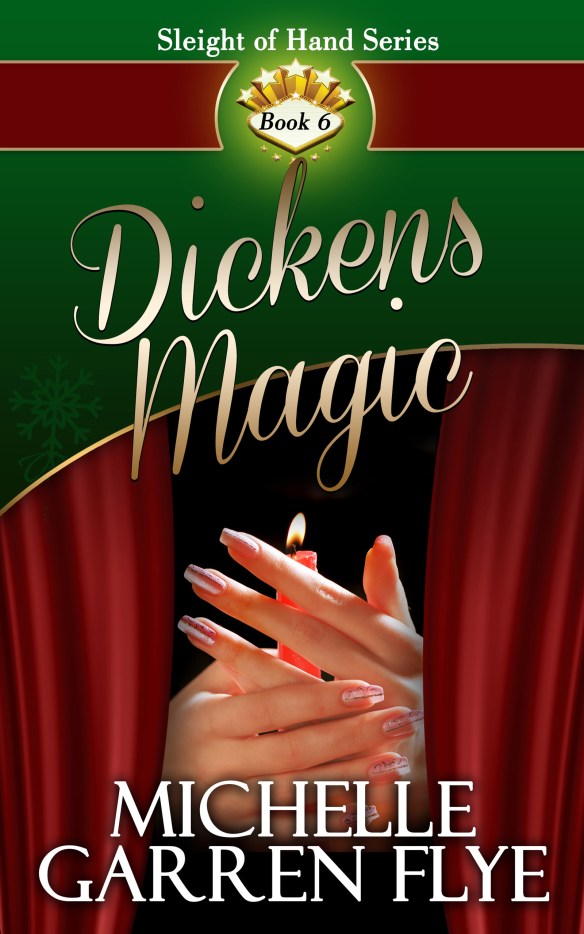
By the way, I had a whole other post planned for today extolling the virtues of this cover for Dickens Magic. Because I seriously can’t stop looking at it. Many, many thanks to Farah Evers Designs for the fantastic work on it!

dickens-magic

Write the change you want to see: A Birthday Thank You for a Friend

Special Note: I’ve been fortunate to have a lot of teachers in my life. Some of these people probably don’t even realize I was their pupil at one point or another. I’d like to dedicate this blog post to a friend who greeted me in the hallowed halls of the Zoetrope writers workshop at the true beginning of my writing career. Her example and kind words of encouragement have helped many a writer over the years, whether it was as an editor or reviewer or friend. Happy birthday, Beverly!IMG_4047

Mahatma Gandhi said, “You must be the change you wish to see in the world.” I think writers have another obligation. Write the change. It’s the charge given to each of us with this calling to write our feelings and dreams down and send them out on paper airplanes into the world.

Don’t like the world with less opportunity for lower classes? Imagine it different. Write the change.

Don’t like racism? Write a world with more tolerance.

Don’t like partisan politics? Erase them with a few strokes of the keyboard—in your writing, anyway.

Horrified by the attitudes that resulted in the #metoo movement? Write a world where consent is actually romanticized. For instance:

She loved and trusted this man. Nothing they chose to do together could be wrong or destructive. —Dickens Magic, coming October 31, 2018

I’m not saying you’ll change the world with your stories. I’m saying it’s up to the writers and dreamers to reach out to others and show them what the world could be. Imagine a world where the rights of every human being are respected. Imagine a world where technology aids instead of replaces human interaction. Imagine a world where everyone is valued for what they bring to the world, no matter what their skill is.

Imagine it and write it.

Writing is a funny, funny thing.

close up of hand over white background

Photo by Lum3n.com on Pexels.com

Funny weird, not funny ha-ha.

Funny in that when the fever is on you, you can write five to ten thousand words in a day.

Funny in that on those days, you don’t want to stop for anything.

Over the course of the past few days, I wrote the last fifteen thousand words of my next Sleight of Hand novel Dickens Magic. And then I started another one that I’m not ready to talk about yet. I’m now six thousand words into that one.

Writing is funny, but not exactly fun. While you’re in the fever, you’re aware of the other things you  need to be doing. But even though you’re not having fun, there’s no way you want to stop.

For instance, right now, I want to be back at work on my work-in-progress, but I knew I needed to stop by here and remind you that:

(a) Becoming Magic is out there now, just waiting for readers and reviewers. It has two reviews on Amazon and still sits at five stars.

(b) All my self-published books with the exception of Becoming Magic (because really, it’s a new release) are available in the Smashwords Summer Sale for FREE with coupon code SS100. Go get em!

With that said, I’m off to indulge myself some more in my funny, funny chose profession.

Leaving the backlist behind

Over the past week—especially since Wednesday when I discovered my dog had chewed through my computer cord—I have been working on getting the last three of my self-published books online at Smashwords. Smashwords will make these books available in multiple formats at multiple outlets, so that you aren’t just limited to Kindle if you wish to read in ebook format. In a few days, every one of my books will be available at Barnes & Noble, Amazon, Kobo, iBooks—you name it, I’ll be there. Every format.

Revisiting my backlist became less of a chore than I’d imagined it would be. I actually found myself giving my last three books (Weeds and Flowers, Ducks in a Row, and Saturday Love) a thorough proofreading…and enjoying it. I haven’t read those books in ages.

Weeds and Flowers isn’t even a romance like I write now. More of a coming-of-age story that was written in a sort of patchwork quilt way—bits and pieces that I stitched together to make a novel. Appropriately, it was actually probably the first novel I wrote, though not the first one published. I had forgotten how much that book meant to me, though. It’s the only one—so far—that has something in it that actually happened, not actually to me, but to people around me. Re-reading it was like reliving some of my own childhood, even if I was more watching than experiencing at the time.

As for the other two, Ducks was the most difficult book I’ve written thematically. I think of it as sort of an anatomy of both a marriage and an affair. I actually still dislike the heroine, though she did grow a lot during the course of the book. And I fell in love with one of the male characters. So much so that he ended up getting his own book, Saturday Love, because I just couldn’t leave him hanging like he was at the end of Ducks. Regardless of my feelings for the characters, however, re-reading those books was like visiting with family I hadn’t seen in a while. And it revived a past resolve to write a third book in that series. If I can ever get past the two or three other projects I have waiting for me now.

But for now, I am returning to work on Dickens Magic, my next in the Sleight of Hand series and my first ever attempt at a holiday-themed book. I’d reached a sort of roadblock on that one. I couldn’t quite figure a believable way to drive a wedge between the hero and heroine but over the course of the week, I had a brainstorm. I plan to give myself two more weeks to finish the first draft of Dickens Magic, then I have another start on a not-magic-related book and at some point I have to get to work on Magic at Sea… 

But maybe that would wait. Maybe I could start my third book about the Hubbard family, Agape Mou (Greek for “My Love”). There’s a reason it’s Greek. If you read Ducks and Saturday Love, you’ll understand. I have plans for a very good-looking Greek hero for that one, but his ties to the Hubbard family are very complicated and bound to result in some drama. Especially when he gets involved with the daughter of the family…

Oh crap. If I’m not careful my imagination will get stuck in sunny Greek vineyards instead of a theater all decorated for Christmas. Better get back to work! Herete, my friends.