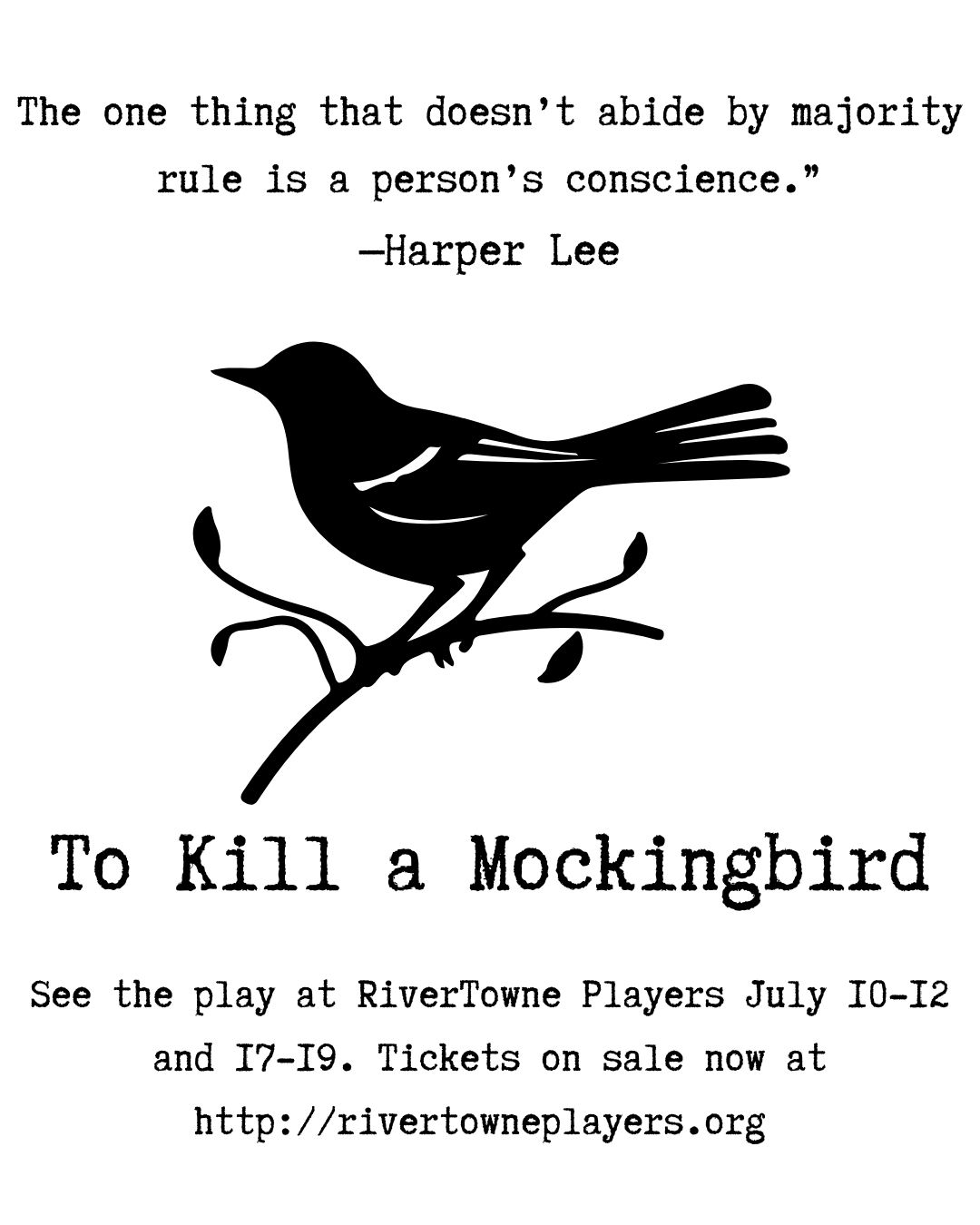
Opening Night of To Kill a Mockingbird (and what it meant to me)

I was born at the beginning of the 1970s in the mountains of North Carolina. Maybe it was the altitude of my little town (3,000+ above sea level), but the end of Jim Crow Laws didn’t seem to mean much there when I was young.

And really, I was too young to be aware of much, but I remember hearing my parents whispering about burning crosses and nooses. For some reason, the streetlight on the corner near my house marked an area of our neighborhood I wasn’t allowed in. An area of people whose skin was darker than mine but who lived the same way I did.

Mostly we used the “polite” word. Colored. But as my brothers and I got older, we rode bikes and climbed trees and played stickball games until well after dark with any color child that showed up, regardless of which side of the neighborhood they were on. The streetlight on the corner shone equally on us all.

I never really understood any of what was happening around me or what I heard until much later. I didn’t know what racism was or that some of the people I knew were racists. Even some of the people I loved.

And it wasn’t until recently that I realized I would be banishing vestiges of that same racism that I was born and bred with for the rest of my life.

It’s a journey.

The thing I have learned from playing Miss Maudie in To Kill a Mockingbird in our local theatre production is that this journey is one I can’t just take in my own shoes. As a white Southern woman, I have to look past my own sphere into others’ worlds. I have to not only see other people for what they are but to feel it as best I can.

This nearly 100-year-old play remains important to this day because our nation continues to a journey toward enlightenment and living together. Sometimes we go forward in this journey. Sometimes we take a step back. But I believe eventually we will reach that light, and maybe we will find a really fun stickball game going on under it. A game everyone plays together./
Poem 21 (National Poetry Month): Waiting in the Wings

This morning it occurred to me that the whole world is really “waiting in the wings” if, as Shakespeare said, “All the world’s a stage.” Of course, that made me realize how much I miss the theater. “My” theater, one of my happy places, is being renovated during this unscheduled downtime, and I’m thrilled for the possibilities. I’m also a bit worried because I don’t know when we’ll be able to get another production on the stage, even though we do plan to. But plans don’t mean much right now, do they? Will our cue ever come? While we wait, though…

Waiting in the Wings

By Michelle Garren Flye

We’re waiting in the wings,

Listening for our cue.

It’s dark while the lead sings—

Only one spotlight will do.

The scene goes on forever…

It’ll never be our turn!

The ensemble is just extra,

Of little to no concern.

Oh but when the time comes

We’ll burst upon the stage

With light and color and costumes

The audience to engage!

We’ll flit about the floor,

Dance steps we memorize.

No one will dare snore

When our chorus arrives.

But now we wait in silence

Hoping we’re in tune.

We give each other guidance:

Our cue will come soon.

Photo by Michelle Garren Flye

Dickens Magic: My Exception Proves Nothing

IMG_4795

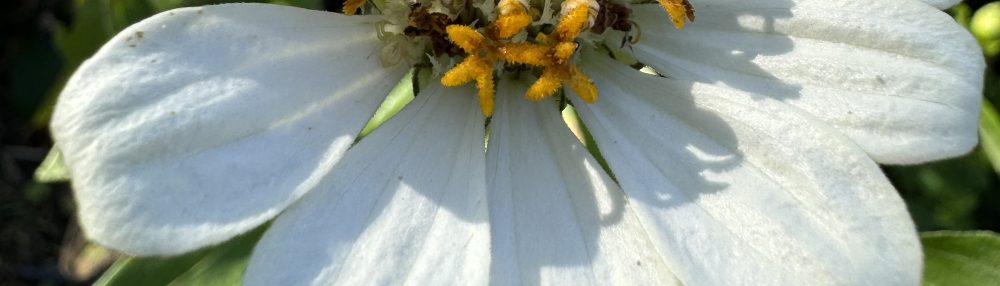
This picture has nothing to do with this post. It’s just a pretty picture I took and posted here to catch your eye. Do you like it?

I’ve never liked that phrase “the exception that proves the rule”. If there’s an exception, then it proves the rule is faulty, right? Or does it prove that there is a rule to begin with? Or is it that you’re “testing” (proving) the rule with your exception?

No matter what, the expression is rife with possibilities for misinterpretation.

Which is why I’ve decided that Dickens Magic, which is most definitely an exception to my normal formula for Sleight of Hand books, proves nothing. Nothing except that I will go where my characters and their story lead me.

But how is Dickens Magic different from my other books? First of all, the hero and heroine are not magicians. Neither one of them. They aren’t involved in magic (at first, at least) in any way.

Second, Dickens Magic does not take place in any exotic locales like Las Vegas or the Caribbean or Hollywood. There is one very brief scene in New York City. The rest of the book is set entirely in New Bern, N.C., one of the least exotic locales you could ever want to visit.

Third, Dickens Magic’s setting centers around a building. It’s actually a building I love. The Masonic Theatre where RiverTowne Players performs. And it’s based on my own theatrical exploits. I tell everyone my recent desire to be an actress is my midlife crisis. And I’m good with that. But the truth is, if I had never walked into that theater with my daughter when she auditioned for The Little Mermaid, Jr. at the age of five, that midlife crisis would probably have lain dormant forever. I couldn’t do it anywhere else, I’m pretty sure.

Finally, I never put myself in my books. I can honestly say I’ve never read one of my books and seen myself in it. But this one, I kind of did, although I didn’t realize it until the final round of editing. It startled me at first when I noticed it, and certainly it’s not a real clear portrait of who I am, but it’s there. I’m not one of the main characters, though, so don’t think I think I’m the multitalented Kate.

So, my exception is out there. It doesn’t prove a thing. I’ll return to the rules (or most of them, at least) next time. Though maybe I’ll decide it’s more fun breaking the rules, especially the rules I’ve made myself.