It’s Complicated…

Last year one of the local bars held a singles meet-and-greet where people were given their choices of cups. Red for in a committed relationship, green for available and yellow for “It’s complicated.”

I was interviewed for a local television news story last week. If you’d like to watch it, you can here: https://www.youtube.com/watch?v=X5Rr4vjwxjk&t=15s. The reporter was young, enthusiastic and very, very capable. I admired her. She asked me a lot of insightful questions about bookselling. One of those questions was something like how did I feel about Amazon.

I’m not sure I answered her question very well, because, to be honest, my relationship with Amazon requires a yellow cup.

It’s complicated.

As a bookseller, do I resent Amazon? Not really, honestly. Amazon fulfills an entirely different purpose from what I do. I order supplies for my store from Amazon because I can find good deals, compare products easily and, quite honestly, it makes my life easier. At the end of the year, for instance, when I need to find receipts, it’s much easier if everything is on Amazon instead of a few here and a few there.

Does Amazon affect my business? Again, that’s complicated. I mean, yeah, probably. I don’t know what it was like being a bookseller before Amazon, though. And I don’t sell new books, at least not new bestsellers. I sell used books and local authors. And no, Nicholas Sparks isn’t one of “my” authors lol. My authors sell their books here at the store on consignment, which means if the books sell, they get a check.

Now, that brings me to a more interesting question. As a local author who publishes her books and sells them on Amazon’s self-publishing platform KDP, how do I feel about Amazon?

If I cared enough to dig into my true feelings about it, I’d probably resent them more. Their algorithms often hide independent authors like myself. The pitiful amount of royalty I receive from each sale on Amazon takes a while to add up to a measurable sum. I have tried their “marketing”, but it amounts to giving away books or paying more for each purchase due to empty “clicks” than I get from the sale.

Still, Amazon is exceedingly fair in their pricing for author copies and their system is incredibly easy to use. I currently have twenty-six personal titles on my KDP Bookshelf, and I have also used KDP to publish all the literary magazines for my store. When I am asked for advice on how to self-publish, I send authors to Amazon without a single qualm.

I got a little sidetracked with this post. I started out to tell you Where the Sidewalk Begins, my book of love poems, is now available on Amazon in Kindle, paperback and hardcover. But I got distracted thinking about my feelings. Anyway, starting tomorrow and running through Sunday, Where the Sidewalk Begins is FREE on Kindle. And on Sunday at 11 a.m., I’m going to do another live poetry reading from the book.

I dreamed I fell in love with none other than the moon…

from “Wow” by Michelle Garren-Flye
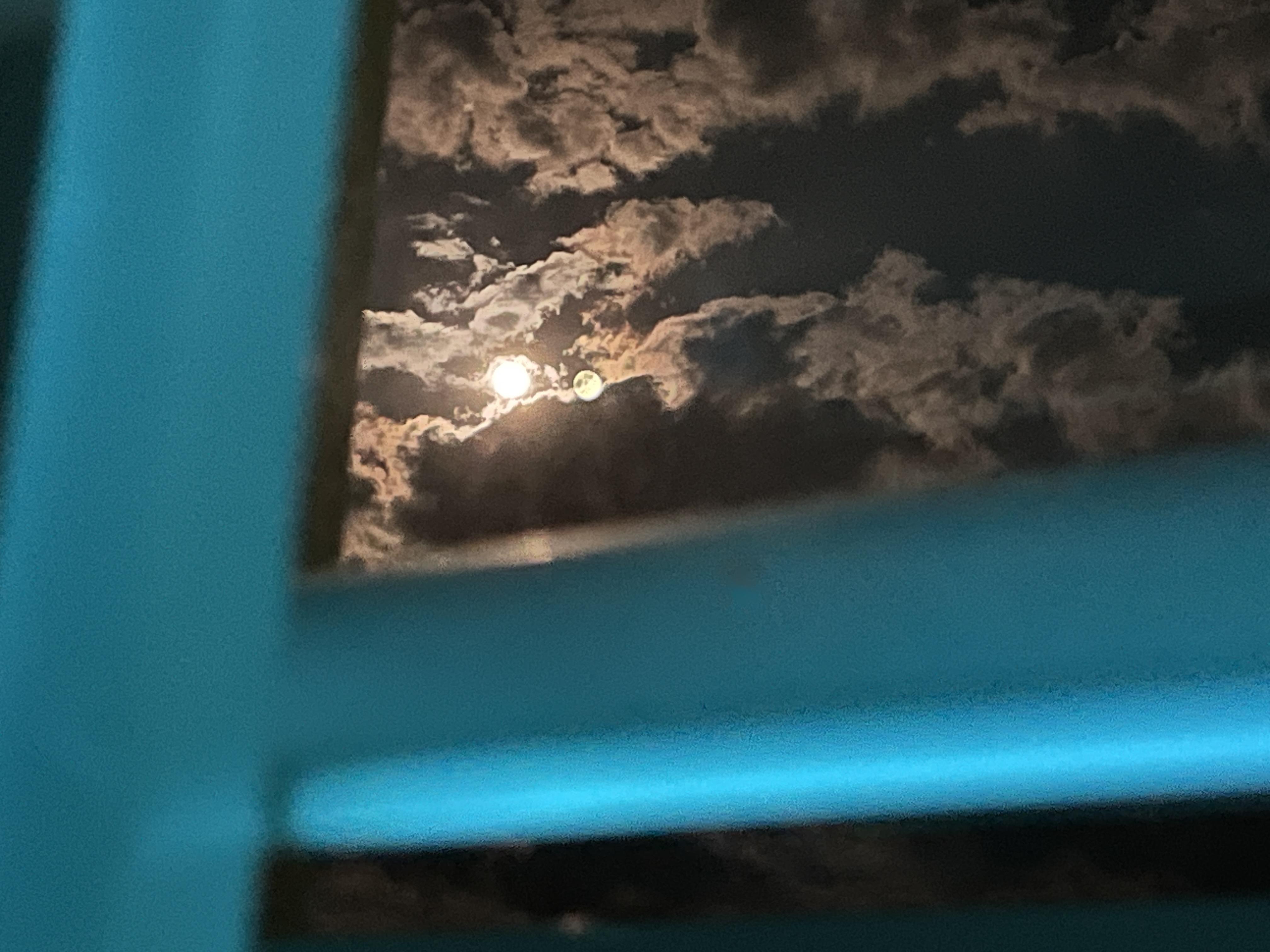
Photo by Michelle Garren-Flye Copyright 2023

I don’t have a problem with Amazon. Not really.

This weekend a friend tagged me in a post on Facebook. It was an article by Adam Stern in The Chicago Tribune entitled “Independent Bookstores are More Than Stores”.

This article gave me a lot of feels.

First, as a reader, I totally agree with him. I remember as a kid haunting local bookstores. I would sometimes spend hours browsing bookstore shelves. That’s how I discovered Anne McCaffrey, Piers Anthony and even Jane Austen. We had a used bookstore in our town called The Book Nook. I would often trade books in there. I’d bring in a stack of dog-eared novels and leave with another. I believe that’s where I first made the acquaintance of Stephen King. There is absolutely nothing like browsing a bookstore’s shelves and taking home a new book by a new author you might never have tried before.

And yes, this experience is slowly dying off.

Second, as an author, I have a love/hate relationship with Amazon. They make it easy for me to publish my books. It costs me nothing but time to put my book up for sale on Amazon. BUT they make it easy for anyone to publish their books. Forgive me for sounding a little uppity here, but when I decide to publish something, it’s gone through intensive editing. I self-edit, but I am an editor, so I can do it. My books are not the stream-of-consciousness, unedited, full-of-typos books that have given independent/self-publishing a bad name. In fact, I would venture to say that my books are better edited than some bestsellers. But it’s difficult for readers to trust self-published books because anyone can self-publish. Hence, the love/hate relationship.

I cannot hate on Amazon when they provide essential tools for me, though.

Third, as a bookstore owner. Okay, I should hate Amazon, right? Again, there’s mixed feelings here. My store serves a different purpose than Amazon. You will not find the latest Oprah pick (does she still do that?), the newest best seller, the trendiest hot read on my shelves. I have well-loved classics, dog-eared novels, a decent selection of nonfiction, and LOCAL, INDEPENDENTLY-PUBLISHED AUTHORS. So as far as that goes, I don’t have a problem with Amazon. When someone comes in and asks for Nicholas Sparks’s latest or the new book by Barack Obama, I cheerfully refer them to Books-A-Million or Amazon. “But I want to keep my money local and help you,” they say. “So browse the shelves and find something you like from what I have,” I reply.

That’s my problem (and, I guess, Stern’s) with Amazon. But it’s not just Amazon. It’s big publishing in general. And people like Oprah who presume to know what other people should read. They have the influence and resources to push the same authors over and over again. The same ideas get consumed over and over. Just because I can publish my well-edited, pretty damn readable book doesn’t mean it’s going to be discovered by readers who have been conditioned to want to read the latest bestseller, the latest trendy nonfiction, the latest thing Oprah said was good.

So, to those who call me up and ask for the book they heard about on Good Morning America this morning, I say, “If you truly want to help your community and keep your money local, have a look at our local author section. There’s some good stuff in there that you will never know about if you don’t give it a try.”

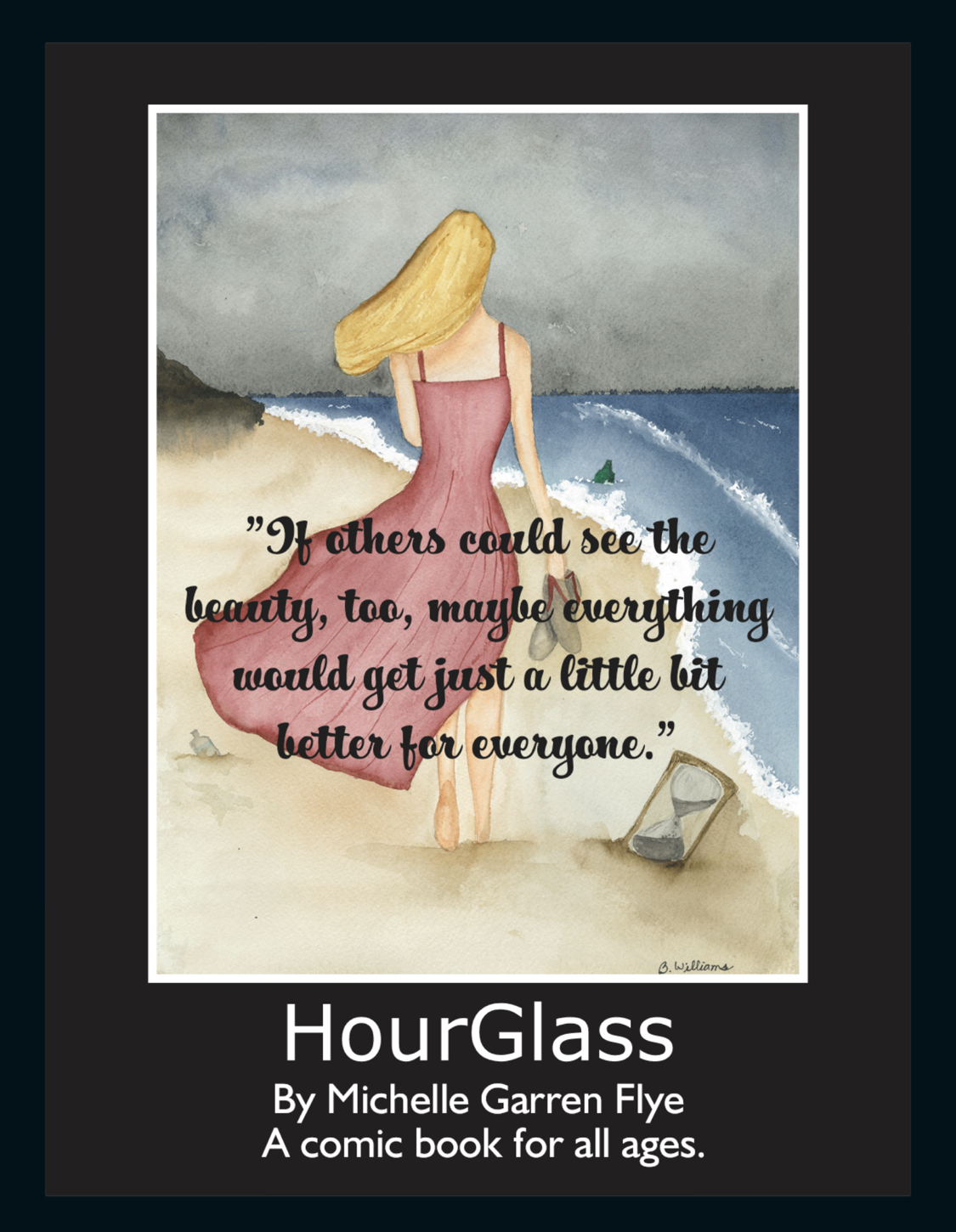
My independently published graphic novel.

Buy local: Support independent authors

Studies show that buying local is important to local economies, right? More of the money you spend returns to your own local economy. Did you know buying from an independent local author has the same benefits?

Authors published by large publishing companies get much less of the profits from sales of their books. Therefore, the majority of the money you spend on a bestseller in the bookstore goes national, not local. However, if you buy a book that is independently published or published by a small press, the author gets much more of their proceeds. Therefore, more of that money returns to your local economy, growing local businesses and

True, you may only be able to find independently published books at online retailers, meaning part of your money goes to support those retailers. However, this pales in comparison to the portion of money that goes to traditional publishers. The average traditionally published authors makes, on average, a ten percent royalty, but this is on net profit, so any discounts or overhead are taken out of the proceeds before the author gets a check. So an eight dollar book does not make the author eighty cents per book sold.

By contrast, independently published authors (read self-published here), can make up to a seventy percent royalty on a book. Usually independently published books sold in ebook format online are priced much lower than traditionally published ebooks (mine range from free to $2.99). Paperbacks can be more expensive because, at the moment, they are print-on-demand, which means there are no warehouses full of my books anywhere. I keep a few on hand for promotional purposes, but basically, if you order a physical copy of my book, somewhere a press fires up and prints it off.

It’s kind of cool to think of that.

In truth, though, you as a consumer have the chance to change the way books are made. You can go into a bookstore and suggest that they carry my books. The bookstore could then contact me and we could haggle out a price, which would result in me shipping them a few copies of my books, which would then share brick-and-mortar shelf space with traditionally published books. In most cases, larger chains are less likely to do this than the independent book stores which are, sadly, becoming fewer in number.

Consumers can change that, too.

So, buy local. Chances are good that no matter what subject matter or genre interests you, there’s a local author who’s got it covered. Please feel free to list your favorite independent author’s website in the comments.