What is Utopia?

As a writer, I get to imagine things all the time, but one thing for me has always been sort of amorphous. What, exactly, would Utopia be like? I can imagine a place with green fields where everyone does their fair share, but eventually I start seeing flaws in the system. For instance, I don’t like working outdoors, I tend to kill plants, and I hate bugs. Would I be expected to help grow crops the same way my brother, who has a green thumb, would? And as a librarian, I wonder, would people who don’t care about books be expected to help me take care of them? How can you be a caretaker for something you have no care for? Who’s making all these rules, anyway?

Usually, I end up deciding I’d rather just retreat onto a mountaintop or desert island with the people I love most and have supplies air dropped to me. But what kind of liberal does that make me if I can’t even picture a Utopia that works?

Today I read this wonderful opinion column by Ross Douthat in the New York Times called Watership Down and the Crisis of Liberalism and I practically clapped my hands. If you’ve never read Watership Down, the classic tale by Richard Adams, you must. Go get a copy. I’ll wait. Okay, maybe not, because it is like 500 pages long, but Watership Down was a masterpiece, and Douthat hits the nail on the head with what makes a true Utopia and how Adams created one with this sentence:

And what makes the regime the rabbits are founding good — and successful, but first and foremost good — is the integration of the different virtues, the cooperation of their different embodiments, their willing subordination to one another as circumstances require.

Bam. Right there. Each rabbit that embarks on the quest to found a new home after they lost their old home to ecoterrorism (a subdivision) has a unique skill that they offer to the group. The leader, the strong, the religiously gifted, the athletic, the intelligent, the creative—all have something to offer the group.

So that’s what Utopia is to me. It’s a world in which we all have our unique gifts and they’re all valued. Imagine a world where you could find your gift and pursue it and contribute to the world in your own way. If a teacher’s offering of education, a doctor’s offering of healing, a policeman’s offering of safety, a politician’s offering of governing, a writer’s offering of…whatever we offer—it was all valued. Every skill, from acting to playing a sport or inventing, all the way to trash collecting and housecleaning.

Isn’t that what we all want? A world we can live in without fear of someone taking what is ours? Our job, our belongings, our happiness. In a world where everyone already had theirs, maybe that wouldn’t be such a problem. To me, that is Utopia.

(Side note: The only other place I’ve ever seen a Utopia that looks like it could work is Starfleet in the Star Trek universe.)

But what is Utopia to you? In our highly divided culture today, maybe this isn’t what everyone wants. Utopian dreams come to us all, though. I’d love to hear yours.

P+HJCTX2GkIW5TG4EzA

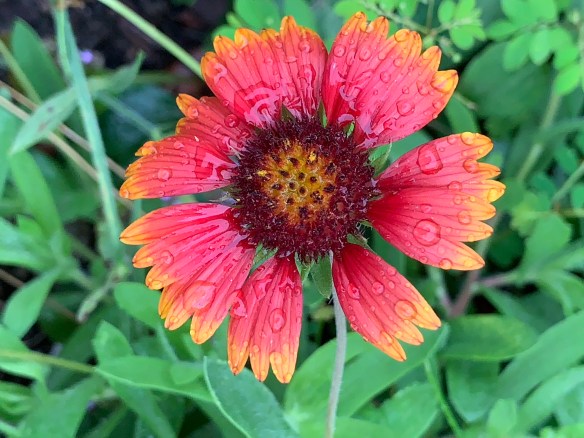
Utopian perfection? Photo by Michelle Garren Flye

Poems: Push Back, Speak Up (Warnings)

PWyCEJ1yRHysEAaF61coNQ

Silence is not an option. It’s not golden. Find your voice before it’s lost.

Once again, I take my inspiration from a strong woman. Nancy Pelosi may not be the first person you’d think would inspire poetry, but that picture of her pointing a stern finger at a spoiled man while he recoils in stunned anger should inspire every woman who’s ever felt smothered by men.

I know how that happens. Every woman knows. We’re conditioned to get married and have children and if we don’t then there’s something wrong with us. I got married and had children. For a time I did lose my voice, but then I found it again in my writing. I’m fortunate to be married to a man who is confident enough in his own skin to allow me to speak out from mine.

Me too, nasty women, hear me roar, fight like a girl, my body my choice, the future is female, and my personal favorite: silence is not an option. These are just a few of the things women have found the voice to say. But what they all add up to is this: Every. Single. Woman. Has. A. Voice. And that voice is not meant to echo, it’s not meant to be bitten back or smothered behind a man’s hand. Speaking up doesn’t make you less of a woman. It makes you more of a human.

Speaker Pelosi is speaking up in that picture, and that’s why Donald Trump thinks it depicts her as having a “meltdown”. That’s why some men will agree with him. And that’s why we owe it to all women everywhere to speak up. We have voices. Let’s use them.

Silence is not an option. At least, it’s not a good one.


Push Back (A Warning)

By Michelle Garren Flye


He wraps you up.

Warmth envelops you.

It’s nice, safe, there in him.

You might never want to leave.


He wraps you in.

Safety can suffocate.

You choke, feel lost and alone.

You can’t be free now, can’t speak out.


He wraps you down.

And now you push back.

Will he give way, let you breathe?

Can you tell him how you feel at last?


He wraps you tight.

Push harder! Don’t give up!

It’s your life to live, your love to give.

And you were given a voice to tell your story.


He sets you free…

You can breathe again.

You can speak and believe.

He stands beside you, what will you do?


You take his hand.

You’re in this together.

Side-by-side, he can’t forget you’re there.

The ties that bind don’t have to be painful.


Speak Out (A Warning)

By Michelle Garren Flye

Lips tremble, form words without sound.

A whisper pushes past, but no one hears.

How can you expect to use what was never found

After days upon days upon years and years?

What is a mouth made for if not to speak?

What good is a tongue if behind it there’s no voice?

You try to push it out, but the words barely squeak.

It’s what happens in the end if you make that choice.

Don’t echo, don’t fib, don’t quiet what will never die.

Your spirit withers within a body of silent tears.

You wish you could scream, but you can only cry.

Oceans of silent waves push back on your cares.

Voices can be lost without thought and exercise.

Form a word of your own now and then—or lose hope.

If you bury yourself in a man’s beliefs, you’ll just tell lies.

Speak up, speak out, and if he objects, just let him cope.

Mumfest weekend!

Just a quick note here to let you know I’ll be at Mumfest this year, representing both Michelle Garren Flye and my alter ego Shelley Gee, who you might know as the writer of charming children’s mysteries. I will have copies of all my books, including my poetry booklet, which is in limited release (meaning you either have to go to The Next Chapter Books & Art or find me to purchase a copy). I’ve cut the prices for Mumfest weekend if you buy directly from me, so it’s a great time to stock up on good books! I hope to meet some of you at Mumfest. I’ll be in the purple tent on Middle Street with my friend Noel of Blissworks. It’s hard to miss! Noel’s artwork is fantastic!

img_4789

Mumfest 2018

Poem: On the Screen

What’s happening right now breaks my heart because it was preventable. In fact, it was being prevented. Our Kurdish allies are fighting and dying. Mothers are losing their children. Tiny babies lie in pools of blood, covered in dust. And it’s all because a few men made decisions that meant their lives meant nothing. Life is meant for more. Be outraged. Be angry. Be sad or regretful or depressed. Be anything but accepting of this tragedy. Life is meant for more than ending on our television screens.

On the Screen

By Michelle Garren Flye


From across the world we watch as death rains down.

How can we know what to feel?

Safe in our kitchens, our warm homes, our towns—

Not part of the pack anymore.


Broken bodies litter the earth but it’s so very far away.

You run, and we don’t miss a meal.

Dust and rubble clear, but your sorrow never may.

Meanwhile we watch the news at four.


We shake our heads: Nothing I can do, nothing to be done.

Our hearts go out to your appeal—

But tomorrow’s just a day for us—another day in the sun.

And we’ll check the headlines of course.


Across the world, an ocean away, with only the media to guide.

As your hearts’ blood spills

On pavement stones and runs down the mountainside—

Life is meant for more.


Poem: (In Remembrance) Cast Out

(In Remembrance): Cast Out

By Michelle Garren Flye


It’s all over but the crying now.

We never knew that would happen. We didn’t see the loss of hope, the loss of growth, the loss of who we are. How could we?

Even as we witnessed its birth.

We clustered around televisions and fell to our knees and cried and prayed and cursed. We angrily threw a flag over the destruction.

We swore we’d make them pay.

Blinded by rage, we fight a war no one can win. We send our soldiers to deserts of ash and blood. We lose what’s left of freedom in revenge.

And what of those born after?

Born into a world of anger and suspicion, how can our children ever be innocent? We guard and shield, but they know and despair.

Do you remember what it was like—before?

Before the hate, the fear, the constant defending against evil. Doesn’t it look like a golden age now? Doesn’t it look like a garden?

It’s all over but the crying now.

Cast out, left to drown in hot tears like jet fuel streaming from the eyes of a nation. Did it melt our core? Do we only wait to fall?

Regret tastes like ash, blood, desert sand. And tears.

qDvCpuXdS72ABWqRrFiHdQ

Poem(?): Dos Mundos…Two Worlds

IMG_0253


Dos Mundos…Two Worlds

By Michelle Garren Flye


Mama ties back my hair.

Tu eres muy linda, Mija, she says.

You are very pretty, my daughter.

I hear it both ways, bilingual.

Best of both worlds, Abuela might say.

But we left Abuela in Mexico long ago.


Mama leaves me at the school gate.

She tugs my ponytail, smiling.

No tengas miedo, she says.

Do not be afraid…and I will try.

My mother speaks three languages.

Love is a language, too.


How do you say school in Spanish?

The girl asks me with a friendly smile.

Escuela, I tell the girl, not afraid.

Cool, she says. Want to play?

We play tag and I am happy.

Mama was right—there is nothing to fear.


I am brave all day. I am not afraid

I win the spelling bee, all in English.

My teachers are all American.

I can speak to them and I’m not afraid.

I want to tell Mama about my day.

I wait after school, but she doesn’t come.


My neighbor comes and kneels beside me.

She’s American, she has two teenage sons.

She doesn’t speak Spanish, but she speaks love.

Her voice breaks when she tells me they took Mama.

I know what she’s saying, even when I stop hearing.

I’m not me anymore. They took me, too.


She makes space for me in her home.

They are kind, but I know I have no place.

I used to have two worlds, now I have none.

No country, no place for me, no mama.

One of the lost generation without a home.

Y ahora, tengo miedo. And now I am afraid.

Poem: Kisses of Steel and Love

Kisses of Steel and Love

By Michelle Garren Flye


Blow a kiss to the wind, she said.

What good is a kiss? I replied.

Kisses are free to drift—just feathers.

What good is that in a world of hate?


Blow a kiss and find out, she said.

Open yourself to the world, embrace

Its sharp edges with your heart.

Blow kisses of steel and love.


Blow kisses to stop hate and fear,

To staunch the flow of tears and

To shield us all from the pain.

But I saw the fault in her grand plan.


I might blow kisses of steel and love

But pain is a bullet and it flies direct,

While kisses float aimlessly away

Like fluff and prayers on the wind.IMG_6992

Poem: Shards of Lost Justice

united states of america flag

Photo by Gerritt Tisdale on Pexels.com

Shards of Lost Justice

By Michelle Garren Flye


She trembles before the white man, a tiny dark hand clutched in hers.

“This is my child,” she says, defiant before him. “I’m keeping her.”

But the white man tears the child away and glares at the black woman.

“Send her back,” he says, and white hands pull mother away from child.


The brown woman struggles in the clutch of the ICE men.

Her daughter weeps as she watches them take her away.

“Let her stay,” pleads her husband. “It was only a traffic ticket.”

But the man with the badge shakes his head. “Send her back,” he says.


The little girl stands alone before the judge, no idea where her parents are.

“They brought me here,” she whispers. “I don’t know where my home is.”

“She was separated from her parents,” her lawyer says. “This is not the American way.”

The judge shakes his head. “The law is clear. Send her back.”


The brown woman is different. She is slight but strong, not easily vanquished.

An American citizen, a Congresswoman, a representative, she speaks out.

He doesn’t like what she says, her differences frighten him, so he bullies and brags.

“She doesn’t love America like me,” he tells the mob. “Send her back,” they chant.

A Perfect Union: Hang Together—or Separately?

IMG_5233“It is a common observation here that our cause is the cause of all mankind, and that we are fighting for their liberty in defending our own.” —Benjamin Franklin, 1777

It was indeed a high ideal, worthy of striving for: a country where all men were considered created equal. But, as many point out, even those who dreamed it up didn’t really understand what it entailed.

Yet still, America won her independence from Great Britain and set off on her quest. To welcome the immigrants, whether they be poor or wealthy, hungry or replete. To truly endeavor to deliver liberty and justice for all.

There was a learning curve, of course. There had to be for a nation that enslaved people of color, that treated women as property, that ignored or even condemned those with a different nature (read “with a different sexual preference”). Our nation was nearly a century old when we fought each other over the right to own humans of a different color. And women were not given the right to vote for another fifty to sixty years. A steep learning curve we still climb.

And still we strive. Our Constitution guides us. We want to answer its charge and form a perfect Union of our states. But as the number of states has grown, as more and more immigrants have made their homes here, we have faced a growing quandary. Who is right and who is wrong when so many want such different things? How can we expect a farmer of Hispanic descent to want the same things as a lawyer of white European descent or a businessman whose grandparents moved here from the Middle East?

The very nature of our union of states makes our unified mission ever more difficult. What is easy for the cosmopolitan to accept goes against the very grain of the rural. Add in religious beliefs and splits deepen to crevasses.

And still, until recently, I thought we might someday achieve our perfect union. Until the day our president issued a disturbing statement that women of color who had been duly elected to represent their constituents should “go back to where they came from.”

In that moment, we went from George Washington chopping down a cherry tree to Donald Trump taking an axe to the founding principles of our country. It’s a deep crevasse to fall into, and now we stand divided on either side, teetering on the decision of whether to follow him in or not.

Meanwhile, the enemies of the long-lasting American experiment watch for the opportunity to push us all in. A divided America is much easier to defeat than a “perfect Union”. I like to think that Benjamin Franklin foresaw these circumstances from the beginning. Certainly, when he looked at his fellow signers and co-conspirators and said, “We must all hang together or assuredly we shall all hang separately,” he voiced the fear they all felt. But those words may apply now, too. If our nation proves divisible after all, we will all be left hanging—by our fingertips on the edge of a chasm.

Poem: What Good is a Girl?

Today my heart aches for children, but especially girls. Girls whose childhood is stripped away too early. I remember when men started taking notice of me. When I wore shorts on a summer day and walked down the street in my hometown and a man wolf-whistled at me.

I was thirteen. I had no idea what the thoughts of those men were when they ogled me. If I’d known, I probably would never have left the house again. As it was, I blushed and felt like I’d done something wrong.

That was my first introduction to what some men think girls are good for. Today, in a courtroom, a powerful man is calling 14-year-olds “underaged women”. Which indicates that once a female begins menstruating, she’s only good for one thing. I mean, hey, what else are girls good for?

Well, I wrote this for the mothers of “underage women” and for the “underage women” themselves. We are good for so much more.


What Good is a Girl?

By Michelle Garren Flye


She can sing like a lark and make you feel like you’re flying.

She can paint pictures with words that leave you sighing.

She can build the best sand castles, run fleetly to the sea—

And leave you wondering, what else can she be?


She can spend hours in a tree just reading a book.

She might even share if  you climb up to take a look.

She can tell jokes that make you belly laugh out loud—

Or lay back on the grass and point out a castle in a cloud.


She’ll defend you against enemies, always come to your aid.

She’ll build the best science project, make the best grade.

She can net the winning basket or hit the last goal—

One thing is sure, life with her never gets old.


What good is a girl? you dare to ask.

Better than you deserve, you stupid ass.

IMG_8714