No apologies: I write what I write.

close up of tree against sky

Romance is a window on the reader’s soul, not the writer’s. Photo by Pixabay on Pexels.com

It’s a truth for most romance writers, I think. Our friends and family are almost afraid to read our books. As if they might find out something more about us than what they want.

Why don’t you write something else? I have this great idea for a book you could write.

It could be funny.

I could almost laugh.

Why am I amused? The reason is simple. Any good writing lays your soul bare because you do tell secrets about yourself. It’s the only real way to make your writing read true to another person’s soul. The trick is to write it so no one knows what is true and what is fiction. And I can guarantee you, even those who know me best don’t know what’s true and what’s fiction in my books.

I always say I’m never in my books. And it’s true. I’m not a character in my books. But I am in there. I’m in every word and phrase I write. When you hold my book, you are holding a part of my soul. Is it a window onto my everyday wants and desires and loves? No. Like all writing, and especially fiction, my words are filtered through the reader’s experiences and is more likely to reveal something about them than me.

I guess that’s why I say, no apologies. I write what I write. If you  have the courage to read it, that’s great. If not, please understand when I chuckle a little when you suggest I write something different. I love you, but my visceral answer to such a suggestion is an unequivocal “no.”

In other news…

I’m on Book Reviews by Jasmine today promoting Becoming Magic by talking about what I’d do on my day off if I worked in show business in Hollywood. As you might expect, it’s magical!

And on Smashwords and its affiliates, Close Up MagicBook 1 in the Sleight of Hand series, is FREE just in time for the holidays! Read it if you dare!

Like them or not, you should listen to the poets

If anything has caught me off-guard about today’s political climate, it’s the rising dislike of celebrities and intellectuals. Once upon a time, these were the heroes. Movie stars like James Dean smoked, so everyone had a pack of cigarettes tucked in their rolled up t-shirt sleeve. Jane Fonda said we need more exercise so everyone started aerobics. Remember those “The More You Know” PSAs? They featured everyone from Tom Brokaw to Matthew Perry speaking out about issues like conservation and education. Stars trying to use their star status to make a difference in the world.

In 2016, it felt like all that changed. All of a sudden, conservatives wondered out loud where athletes and movie stars and, God forbid, writers got off having political opinions. And why should they be allowed to speak out about the every day world of politics? Movie stars should just act, singers should just sing, athletes just play their sports (and stand for the National Anthem). The other day, Rob Thomas tweeted that he was shocked to see a reporter’s White House press credentials taken away because he asked the president a question the president didn’t want to be asked. The response Thomas got from fans was less than encouraging in many cases.

But the worst of this is that suddenly writers aren’t supposed to have an opinion. Writers aren’t supposed to speak out against what looks like certain doom. Writers shouldn’t remind the public of what has come before and what it wrought. The press is “fake news” because they are trying to report what’s happening to us. This seems a particularly dangerous attitude, honestly. To prove my point, I’ve compiled a partial list of things writers (mostly in science fiction, but not all) predicted, for want of a better word, in their fiction.

And after reading this, maybe you can understand why I say, listen to the poets. Otherwise, you may live to regret it.

1726 (Jonathan Swift) Gulliver’s Travels predicted the discovery of Mars’s two moons.

1818 (Mary Shelley) Frankenstein predicted organ transplants.

1865 (Jules Verne) From the Earth to the Moon predicted solar sails and lunar modules that launch from Florida and return to earth as splashdown capsules.

1887 (Edward Bellamy) Looking Backward predicted credit/debit cards and shopping malls.

1898 (Morgan Robertson) The Wreck of the Titan: Or, Futility predicted the sinking of the Titanic—by iceberg in the month of April—fourteen years before it happened.

1899 (H.G. Wells) When the Sleeper Wakes predicted motion sensing doors.

1903 (H.G. Wells) The Land Ironclads predicted tanks.

1909 (E.M. Forster) The Machine Stops predicted video chatting.

1910 (Edwin Balmer and William MacHarg) The Achievements of Luther Trant predicted the lie detector test.

1913 (H.G. Wells) The World Set Free predicted the atom bomb.

1923 (H.G. Wells) Men Like Gods predicted phones, email and television.

1924 (J.B.S. Haldane) Daedalus; or Science and the Future predicted in vitro fertilization.

1932 (Aldous Huxley) A Brave New World predicted genetic engineering.

1961 (Robert Heinlein) Stranger in a Strange Land predicted water beds.

1968 (Arthur C. Clarke) 2001: A Space Odyssey predicted the iPad and its use to access news media.

1968 (John Brunner) Stand on Zanzibar predicted satellite tv, violence in schools, and, eerily, President Obama (Obomi was the character’s name). Interestingly, it is set in 2010.

1984 (William Gibson) Neuromancer predicted computer hackers.

1990 (David Brin) Earth predicted broken levees in the Deep South and the meltdown of the Fukushima power plant.

1994 (Tom Clancy) Debt of Honor predicted the use of hijacked jet planes to crash into U.S. government buildings.

Donald Trump’s rise to the presidency has been predicted by everyone from The Simpsons to Philip Roth. In Octavia Butler’s Parable of the Talents, her presidential candidate even used the slogan “Make America Great Again”.

Are these all coincidence? Life imitating art? Possibly, though Stand on Zanzibar and The Wreck of the Titan sound like blatant fortune-telling to me, and how Jonathan Swift could know Mars had two moons in 1726 is beyond me. But what is my point here, anyway? Should Stephen King and J.K. Rowling be allowed to say whatever they want about Donald Trump and the fools who voted for him?

Yeah. Probably. Because true poets have a knack for looking at things a little closer, opening themselves up to the universe a little more, feeling things a little deeper…and seeing things a little clearer than others do. I’m not saying me. I try, but I haven’t gotten there yet. But I do believe we are given poets and prophets and visionaries by a God who wants to help guide us.

And if the overwhelming majority of those poets and prophets and visionaries are saying don’t go there, I suggest we listen.
aged antique book stack books

Photo by Pixabay on Pexels.com

Helpless: 76 words that aren’t for NaNo (poem)

Helpless

By Michelle Garren Flye


I wish I could sing.

Glorious notes,

Beautiful arias.

Fill the room

With emotion.

Shout it out—

With melody.


I wish I could paint.

Dexterous strokes,

Shades of beauty.

Fill the walls

With truth.

Slash it on—

With skill.


I wish I could write.

Eloquent phrases,

Perfect words.

Fill the page

With wisdom.

Jot it down—

With brilliance.


But I can only scream.

Painfully.

Wretchedly.

Helplessly

Filling the world

With fire.

abstract art burnt color

Photo by Pixabay on Pexels.com

Paranormal Interests: Dickens and Me

7A241F6E-D057-4BE3-8D35-3CB616A54869I’ve mentioned before that I loved A Christmas Carol from an early age. I first read this copy, which belonged to my father and is one of my most treasured possessions.
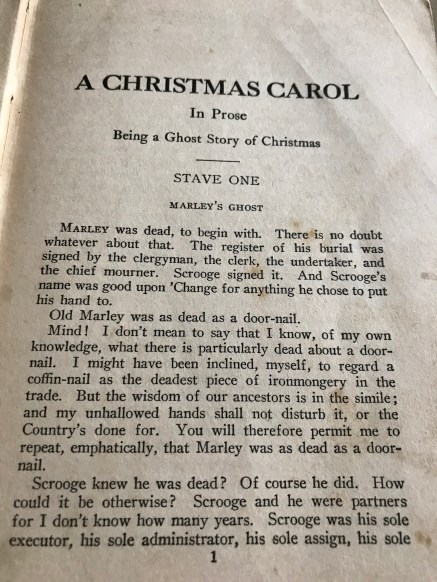
Looking back, I’m not really surprised that I fell in love with that story. It starts out with a ghost, and that’s a definite interest I’ve always had—along with magicIt’s an interest I evidently shared with Charles Dickens, a famous skeptic who helped found The Ghost Club, a club dedicated to investigating the paranormal.

As for me, I rabidly consumed those little dime store pulp magazines—the ones that told of the bloody history of the countess of Bathory and explored creepy urban legends like the spiders in the wig and the vanishing hitchhiker. This obsession grew into a full-fledged love of local legends and lore. I have a jampacked shelf with ghost stories from every place I’ve ever visited.

I figure Dickens and I don’t have to be too reserved about our interest in the paranormal, though. It was, after all, shared by notables like Sir Arthur Conan Doyle and Harry Houdini, among others. And while Doyle was known to be a believer, Houdini and Dickens were both skeptics. And me? I’m somewhere between. I don’t know what I don’t know, and I’m not afraid to admit it.

Have I mentioned that Dickens Magic is available today?


Happy birthday, Dickens Magic!

dickens-magicHappy birthday, at long last, Dickens Magic! I feel like I’ve been waiting forever! And what better way to celebrate my latest book in my magic series than by indulging in a little of the magic of the day?

I try to release my magic books on Halloween for a couple of reasons. First, it’s Samhain, the day the Celts believed the veil lifted a little between this world and that of the dead. It’s a sort of “in between” time and magic abounds. For instance:

  • Bat magic. Bats are messengers. Did you know you can send a message with a bat to the other side of the veil on Halloween? Just ask when you see one out and about tonight.
  • Spider magic. Don’t squash spiders on Halloween! If you find one inside, it’s probably a dead relative come to visit.
  • Black cat magic. If you find a stray black cat curled up on your doorstep, don’t scare it off. It’s there to guard your house against evil spirits. Or it’s a witch’s familiar sent to spy on you.
  • Jack-o-lantern magic. You probably have one guarding your front door. My favorite legend of the jack-o-lantern comes from the Southern Appalachian Mountains where I grew up. One of many “Jack Tales” I read and heard over the years. I especially like the one from Richard Chase’s timeless collection. In this version, Jack the troublemaker made the first one when, after tricking the devil into agreeing not to take his soul to hell, he was also refused entrance to heaven. The devil, taking pity on poor, homeless Jack’s soul, tossed him a coal from hell and Jack put it into a hollowed out gourd to light his way as he wandered the earth. If you haven’t read the Chase collection, it’s available here: Jack Tales.

Second, it just so happens that the master of escape magic, Harry Houdini died on Halloween. Even he couldn’t avoid the inescapable clutch of death, it seems. Or could he? Toward the end of his life, Houdini was alternately fascinated and disgusted by the “mediums” of the day. He spent a large amount of his time studying their tricks and exposing them.

And yet, he and his wife Bess promised each other that whoever passed away first would find a way to contact the other with a secret code that spelled “Believe”. So, after Houdini’s death, Bess arranged a seance on the anniversary of his death every year until her own death, after which it was taken up by other believers.

I wonder about the death of Houdini. What better way for an escape magician to cross the veil than when it is, by Celtic belief, at its thinnest? And surely, if he so desired, he could escape that veil. Yet so far, no one has heard from him. If you’re curious about this year’s seance, you can find out more here: Houdini seance.

Maybe this year he’ll tell everyone to buy Dickens MagicIt’s not totally out of the realm of possibility, you know. He and Dickens shared a real interest in the paranormal. More about that later.

What’s the Date? Writing for a Different Season

IMG_9198

Charles Dickens began writing A Christmas Carol in October 1843. It was published December 19, 1843 and sold 6,000 copies by Christmas.

One of the things I used to love about reading Stephen King books was the way he would put in the dates of when he started the book versus when it was published. Cujo, for instance, was September 1977 through March 1981. Three and a half years he spent on that book.

I think I must know how he felt when he got the idea. It was September and, in Maine, at least, the season is fall. (In eastern N.C., it’s hurricane season.) The dead leaves were skittering across the pavement leaving a wet smell of decay behind, and all the sounds were louder, crisper. Like the bark of a dog. A really big dog.

Of course, that’s all conjecture, and far from how I conceive my own ideas. I decided to write Dickens Magic right after I starred as “Woman 3” in our community theatre’s production of A Christmas Carol. One problem. There’s no time to write around Christmas. Seriously. National Novel Writing Month takes place in November for a reason.

So I ended up putting it off starting the book until spring. By then I’d gained some more stage experience but the Christmas spirit was worn down and put away until this year. I’m only starting to want to put that spirit back on. So how do you write about Christmas in seventy-, eighty-, and ninety-degree weather?

It’s a question every writer eventually has to answer. How do you put yourself in another time? It helps to think of the things you like about that time—sights, smells, sounds. I listened to a lot of Christmas carols, which actually helped me with the magic show at the end of the book. It also helps that snow isn’t really a thing here in eastern N.C., and especially not at Christmas. You might see some in January or February, but not December.

And of course I have to thank Charles Dickens. His story is timeless in more ways than one. It does the soul good no matter what time of year you read it. Considering he sort of self-published it (and did not make the fortune he should have), it does make sense that I would feel a sort of kinship with him about this story.

So, though I didn’t keep exact track of my writing, I think I can guess what the dates at the end of Dickens Magic would be. March 2018-October 31, 2018.

Shout it from the rooftops chimney-sweep style!

Three days to publication of Dickens Magic, book 6 in Sleight of Hand, and I’m doing all the normal stuff. Facebook, Twitter, blog… I’ve currently got a web tour going for Becoming Magic, and I won’t lie, I’ve plugged Dickens Magic several times in that tour.

But how do I get you guys as excited as I am?

Whenever I publish a new book, I think of the chimney sweeps dancing on the rooftops of London in Mary Poppins. If I could convince Dick Van Dyke to shout the news from the rooftops on Wednesday, would that get the word out? That’s what I feel like doing when a new book comes out. I want everyone to know!

It’s a strange world, the publishing world of today. It’s easier than ever to put your words out there, harder than ever to convince someone to read them. The best way to accomplish this now is word of mouth. So, if you’ve ever read any of my books or short stories or poems and liked them, consider telling someone I have a new book out. It’s called Dickens Magic. Shout it from the rooftops!

IMG_0189

Not London… But imagine me standing on the roof shouting about my new book and dancing the chimney sweep dance from Mary Poppins. That’s how I feel when a new book comes out!


I love interviews.

Just for the record. In case you were wondering if you could ask me questions. Because I actually love questions. Even my kids can only wear me down after asking the same question about ten times.

Seriously, though, interviews are fun. Like writing but you don’t have to come up with the idea yourself. I’ve done several interviews on my blog tour for Becoming Magic, and I’ve enjoyed all of them. Today I’m at the lovely Teresa Noel’s blog for another interview. You can find it here: T’s Stuff Interview.

One of the questions Teresa asked me was about my favorite part of the book. I had to think about it, and, I admit, I considered many different parts. I finally settled on one, but I won’t spoil it here. Go check out the interview!

TourBanner_BecomingMagic

New look for a new kind of romance

Everywhere I go now I’m touting my “new kind of romance”, so I thought it fitting that my blog should have a new look. So here it is, complete with a red rose background.

Next month I’ll be attending Mumfest in my adopted home town of New Bern. I’ll be selling my independently published books and giving away a few advance copies of Dickens Magic, which won’t be available until October 31, as well as a complete set of my Sleight of Hand series. I’m super excited about this, and I hope I’ll get to meet a lot of potential readers who are interested in my work.

For those who don’t know, New Bern suffered a great deal of damage during Hurricane Florence. The downtown area, where Mumfest will be held, was particularly hard hit as it is located at the junction of the Neuse and Trent Rivers. Many businesses were flooded, homes were lost. And yet no one has suggested that Mumfest should not happen. And so, on the fourth weekend post-Florence, our downtown streets will be crowded with booths of arts and crafts, food vendors, local businesses and non-profits. Flowers will brighten the corners which not long ago were occupied by storm debris.

And I will be there. I don’t yet know if I’ll be able to sell folks on my new kind of romance idea. I hope so. I truly believe what we read makes a difference. In the same way that what we eat affects our bodies, what we consume through books and other media affects our minds. If it’s good, wholesome and nutritious, so will our minds and hearts be. And good, wholesome and nutritious in the case of romance, does not have to mean not sexy.

I’m going to leave you with an excerpt from Dickens Magic, which takes place entirely in downtown New Bern at the historic Masonic Theatre I have come to love. I think this excerpt, which is from the POV of Alex, the hero, sums up a bit of what I feel about this town:

Alex walked without paying much attention to where he was going. He knew the way pretty damn well, after all. Every crack in the sidewalk, every storefront, every red light and stop sign was ingrained on his heart like a map of his very existence. He’d never felt that with New York, not even Broadway. Broadway was where he worked and his apartment in Manhattan was where he stayed.

New Bern was where he lived.

He paused at a corner. He stood directly in front of the old fire station, now a museum. If he looked right, he would almost see the old theater. It was just two blocks down, set back from the road with an unevenly paved parking lot in front, the crumbling façade of the building adorned with a poster of the theater’s latest production. What was it? Chicago? He’d read the review of it to his mother last week. He’d said maybe he’d take her.

Of course, that probably wouldn’t happen. He knew that.

A trolley passed in front of him and he caught a glimpse of himself in the reflection in one of the windows. Unshaven, his clothes a little more rumpled than he usually allowed them to be, his hair a little longer than he was usually comfortable with. And a worried look that wouldn’t be banished.

I hope you’ll come visit this town I’ve grown to love so much. New Bern got knocked down, it’s true, but she’s getting back up with the grace and dignity you’d expect of a 300+ year old dame. She’s strong. #NewBernStrong

img_0967.jpg

A view of the Trent River from my back deck.


Hacking GoodReads to find your perfect book (and help others find theirs)

I’ve been looking through some GoodReads romance lists and it’s fairly disappointing. Fifty Shades of Grey and its sequels are still listed in top romance categories like “Hottest Adult and Young Adult” (emphasis mine). It’s past time to fight back against this type of thing.

It’s time to hack GoodReads.

I found hope for this in the comments on the “Hottest” and “Most Popular” lists. Romance readers are ready for—and have discovered—indie romances in so many more than fifty shades. Romances by authors of different ethnicities, romances featuring other than the typical male/female couple. Romances without BDSM—remember those?

Are you a reader who’s ready to hack GoodReads and lead the revolution? Here’s a “how-to” guide.

  1. Search for lists with “different” or “indie” in the heading. They’re out there. A list called “Books You Wish More People Knew About” has 16,000+ books!
  2. Create a list! Did you just read the wackiest book ever with a werewolf heroine whose cubs are in school so she joins the PTA? Find some friends who’ve read wacky books that don’t fit into any other lists and make the list. Cross genre is a definite thing in today’s world.
  3. Most of all, if you’ve read a book that you loved, find a list for it! Especially if it’s an indie author. Indie authors would love to see their books on a list where more readers might find it.
  4. Comment on the “Hottest” and “Most Popular” list if you know an author or title which should have been included. You never know when you might be able to point a reader to a book they’ll love but never would have found without you!

The revolution in the publishing industry has begun. Battle lines have been drawn between big publishers and small, between more of the same and originality. The battlefields are places like Amazon, Smashwords, indie book stores, chain bookstores, online ebook retailers and especially a place like GoodReads. What’s at stake? The right of the reader to buy into the ideas of their choosing—not what’s chosen for them.