Unknown's avatar

About Michelle Garren-Flye

I am an author of romance, poetry, children's books and graphic novels. I also own a bookstore. My love of the written word runs deep.

Back home again

Hey everybody. Well, I’ve had a great time guest posting on other blogs, but it’s good to be home again. I’m curled up in my favorite chair with a hot cup of coffee right now. 🙂 I feel so relaxed, I’m calling my blog post my breathing moment for today.

Still hard at work on my third novel and waiting for my husband to finish reading my second so I can start polishing it. Actually, they’ll probably end up being switched as to when I’m ready to start looking for a publisher for them, but anyway, that’s what I’m working on.

If you missed any of my guest posts on other people’s blogs, here’s a few links:

Making a Person on steve-lowe.com (Thanks for the giggles, Steve!)

And on Coffee Thoughts:

Do I always look like this?
Getting Sudsy
(My) Top 5 reasons for writing romance
My final bow

Yes, that was four posts yesterday. I admit I had two written ahead of time, though. And the last one was really just a heartfelt thank you to the Coffee Crew for having me.

So that’s it for today. Gonna go finish my coffee and chill for a minute before getting started on the day!

Thanks for reading, guys.

Gonna go blog somewhere else tomorrow

Please don’t take it personally. It’s not you, it’s me. Seriously, it is. I’m promoting SECRETS OF THE LOTUS the best ways I know how, and that includes guest posts. So, I’m deserting my wonderful BREATHE blog to try to find some new readers! Tomorrow, I’ll be blogging at Coffee Time Romance’s Coffee Thoughts from, literally, dawn to dusk. Of course, life will get in the way, and as luck would have it, I have a PTO meeting scheduled first thing, and it’s probably going to be a long one. However, I plan to make my first post at 6 a.m. (or thereabouts), and I hope some of you will come check it out. You can get there by clicking on the cute image above. Leave me a note to let me know you stopped by. It’ll make the place seem more like home.

GUEST BLOG: Cartoon Violence by Steve Lowe

(Michelle’s Note: Today’s guest post is brought to you by my friend Steve Lowe, author of MUSCLE MEMORY and WOLVES DRESSED AS MEN, both available in November. Steve is a very talented (and opinionated) writer, and if you want to read more, you can check out his blog Assorted Shitzengiggles, where you might be surprised to find a guest blog by ME today. Welcome, Steve!)

My children are being poisoned.

No, this is not hyperbole, they are literally being poisoned. They don’t even realize it, either. But I see it, and I know the culprit lives right in our home. That culprit is TV.

Before I get going, rest assured that I’m not screeding on the ills of television and why you should read instead. (And yes, I know screeding is not a word, but in the imaginary world of the Internet, made-up words are perfectly approprienated to my purposes.) Of course you should read, especially my books. (What can I say, I’m shameless…) What I’m talking about is the level of ‘Wuss’ in today’s programming, and what it has done to my kids.

I’m talking about cartoon violence.

Now, I’m not some cranky old whiner yet. At least, I don’t think 35 is old. But just one generation ago, the cartoon violence paradigm began to shift. As a child, I was right in that in-between, when it began. I grew up on the staples – Bugs Bunny, Tom & Jerry, Popeye – along with the 1980s-centric offerings. For every Wily E. Coyote self-inflicted dynamite explosion, I watched a G.I. Joe episode where people fired guns at each other and blew up vehicles. The difference between the two was the physics.

Bugs Bunny existed in a world where you can run off the edge of a cliff, but you are not affected by the Newtonian laws of gravity until you become aware of them. Only when you looked down did you begin to fall. Or, if your plane was plummeting to Earth and about to crash, but you ran out of gas, you just stopped in mid-air and lived. This world was clearly established by the animators, and as long as they stuck to it, what happened within that framework was acceptable. In other words, we knew it was a cartoon.

But in the world of, say, G.I. Joe, there is no effort made to establish its own reality and physics. It is assumed that the natural order of things is intact, and therein lay the problem. In the world of G.I. Joe, no one died. Their weapons fired lasers rather than bullets, which one would assume would be more potentially lethal than a bullet, but no one was ever fatally struck. And when their vehicles or aircraft were shot down or blown to hell, they always managed to jump out or parachute to safety.

Um… bullshit. You can’t have as many firefights as G.I. Joe had with its arch nemeses, COBRA, without someone getting hit. So, either the lasers, pretty blue and red lights flashing across the screen like mind-numbing strobe lights, have no effect whatsoever on humans, or both sides in these conflagrations were plagued by such poor marksmen that they couldn’t hit water if they fell out of a boat. That, or the writers assumed kids are stupid as hell and would swallow whatever they threw at them.

This does two negative things: it shreds a child’s confidence in his country’s Armed Forces, and also suggests that bad things won’t happen if you fire your laser rifle at your buddy’s head. At least with Bugs Bunny, you knew if you walked off a cliff you would fall (eventually) or if you stuck you head inside a cannon, it would go off in your face. Yes, Daffy Duck lived whenever a shotgun blast blew his bill to the back of his head, but at least there was a consequence. In the pseudo-fake world of G.I. Joe, the round would fly past you and do no harm. You tell me, which is more potentially confusing and harmful to young minds?

And that brings us to today’s cartoons. Back in my day, you had Saturday mornings and afternoons when you got out of school to catch your favorite shows. Now, Cartoon Network streams them constantly, along with Nickelodeon, Disney Channel, et al. You can literally find cartoons any time of the day. The offerings for the most part are neutral, friendly shows geared toward innuendo-laden humor that tries to shoot over kids’ heads at their parents, or gross out humor that appeals to the lowest common denominator (read: kids’ parents).

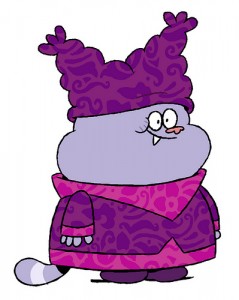
I don’t have a problem with this, but I long for the old days, when physical comedy could blend with classic literature or opera to make brilliant masterpieces. Today’s shows won’t be forever remembered like Bugs and Elmer Fudd performing Wagner. Nothing like this exists anymore. It’s all watered-down pap that mollifies and pacifies our generation of kids, like my own. They’ve not considered the ramifications of what would happen if they ran off the edge of a cliff. In fact, they’ve not even had to consider this scenario. They’re too busy sipping Capri Suns and laughing at fart jokes and fat jokes told by indistinguishable characters on shows called Chowder.


Non-threatening pacifist blob named Chowder

Please understand, I love a good fart joke as much as the next guy. But there must be balance in one’s cartoon diet. For every Flapjack, give us a Tom & Jerry. For every contrived scenario in which the silly main character learns a friendly lesson, give us a mindless segment of a meek mouse outsmarting a big, dumb cat by tricking him into biting his own tail. Bring back these shows, or create more in their likeness.

If you’re concerned about your children blowing themselves up with dynamite like Road Runner and Senior Coyote did, then maybe you should put your dynamite away where the kids won’t get it. No, not up on the high shelf in your closet. They’ll find it, trust me. How about just getting rid of it altogether? Maybe dynamite in the house isn’t a good idea.

It’s just common sense.

Still selling

Just got my third royalty statement, and while the sales of my debut novel have been underwhelming, to put it mildly, I will say this: Nobody who’s read it didn’t like it. At least, nobody has complained. I’ve received quite a few compliments beyond those listed on my main page under the heading “Praise for SECRETS OF THE LOTUS by Michelle Garren Flye.”

My oldest son asked me if I was disappointed my book had sold so few copies. Well, short answer is yes. I want people to read what I write because there’s usually a reason I’m writing it. Plus, I’ve got enough ego to want it to be stroked every so often with a compliment. The more people who read what I write, the better my chances are of getting that sought-after compliment. So yeah, I’m disappointed.

On the other hand, I know it’s a good book. I don’t need anyone to tell me that, really. Hell, I read the thing at least half a dozen times myself after writing it, and I didn’t get tired of it. It’s good, and that’s not my ego talking. I wrote a good book, and when people read it, they like it. It’s kind of hard to like something if you don’t read it, right?

I’ve spent a great deal of time reading articles about promoting your ebook, getting more reviews, selling your book. I’m going to stop that now. I don’t really have a plan of action, but I do have a few promotional materials I’m going to distribute, a couple of ads that will appear soon and a guest blog or two still to come. Other than that, I’m going to do the one thing I know will convince readers I’m a good writer: Write.

Done and starting over

On Friday, I finally finished Always Faithful, the novel I’ve been working on for more than a year now. It felt good, although I admit I’ve got at least two other works that are closer to completion than this one, which is now in the hands of my first reader (my wonderful husband). Still, I finally finished the story of Alicia Galloway and her return to her Marine husband’s hometown after he is killed in action. I know I’ve got the story down, I just need to smooth out a few wrinkles, and I think I have the right iron for the job.

Now I have to refocus. I have another novel, already complete, that needs some light rewriting. Refocusing is a problem after finishing one novel, though, at least for me. It’s almost like starting over. I have to somehow get back into rewriting this novel (tentatively titled Winter Solstice) without calling the heroine “Alicia” all the time. Becky’s a totally different character than either Alicia, who is strong and ambitious, or Josie (a much sweeter character, though still career-oriented), who was my heroine in Secrets of the Lotus. I’ve let Becky be the total romantic female. She’s not weak, but she does want someone to take care of her. She’s artistic and lovable, the type of personality stronger people enjoy nurturing. So, as you can see, it’s essential I not get all these ladies mixed up in my mind.

Anyway, it’s a new day, a new novel, a new direction, hopefully. Let’s get on with it!

Taking a Breather

Just called a friend and interrupted her jog. I felt bad, but she was really sweet and said she enjoyed taking a minute to catch her breath while we chatted. Reminded me I needed to update my blog.

The truth is, I haven’t taken many breathing moments recently, and that’s more my fault than anybody else’s. I’m so close to being done with my work-in-progress Almost Faithful I hate not to spend every moment possible working on it. At the moment I’m filling in the last hole in the story.

You see, when I write, my work-in-progress is like a field being prepared for planting. Consider a blank page as an unplowed, peaceful green field. Lots of potential there. The finished work is a well-plowed field with even furrows. Well, my work, when in progress, is like I’ve gone out into that field with a shovel and dug a bunch of different sized holes and even plowed part of it. So it looks like a field with holes dug in it. As I get closer to being done with the first draft, more of the holes are joined up in furrows, and as I proceed through the drafts, the whole field is evened out. Right now, there’s one small patch of green and I’m busily plowing through it. My furrows are still a little crooked, and some of them dip a little deeper than the others, but I’m close.

All that being said, there’s no excuse for not taking a breather. It’s a marathon and I’m on the sprint to the end, but taking a moment to breathe—and update my blog and apologize to my friend whose jog I interrupted—is very important.

On another note, I just completed copy editing fourteen of the stories that will appear in Horror Library IV by Cutting Block Press. This anthology, which I’m proud to say I’ve been involved with since its inception, is going to be fantastic. The stories I’ve already read blew me away. I can’t imagine the other half will be any different, so if you know a fan of horror, give them one or at least send them a link so they can buy it themselves.

Greenpoints: I planted some tomato plants to grow inside, I hope. Provided I don’t kill them. My family eats a lot of tomatoes (we’re big fans), so I figure we can contribute to a greener planet by growing some of our own. Plus, they’ll probably taste better!

Breathing moment: This moment. Right now.

A Question of When: Guest Post by A.J. Brown

So my friend A.J. Brown and I recently decided to switch blogs, and he’s sent me a really interesting (and entertaining) article about when it’s okay to write a story and when a story is too much. If you’re interested in reading my interview with A.J. on his blog, check it out here: A Spattering of Blood with A.J. Brown. While you’re over there, check out A.J.’s other cool stuff, including more interviews with great writers (including ME!) and some really great free fiction. With no further ado, here is the very talented A.J. Brown!

**Taptaptap**

Hey, is this thing on?

**Taptap**

Whoa, there it goes. Thanks back there, whatever your name is.

Good evening. I’m AJ and these fine folks you see behind me are the myriad of personalities that hang out in my head. Some you may recognize. Others not so much.

They are with me today to (hopefully sit still and be quiet. They are so much like three year olds) ask two questions: When is a story too much? And, when is it okay to tell a story? We start with Dwight Patterson, who is on my left here. Yeah, the one with the slicked back black hair and the tuxedo with the red vest (he likes to dress like Dracula for some reason). Dwight, if you will.

DP: **Ahem** When is a story too much?

Thank you, Dwight. You can have a seat. Go ahead. Have a seat. No, leave the owner of this establishment alone—she’s friends with Herbie and you know how protective he is of his friends…

To answer the question: A story is too much when a reader says it is. Wait. You in the back, sit down until we’re done and hear us out. Mr. Blackwords is itching to get hold of someone today and you won’t like him when he gets hold of you. As I was saying, a story is too much when a reader says it is. However, it depends on the reader. Some folks are just too squeamish and don’t like a bunch of details. Some folks want all the gory information they can get. Others, like me, prefer when things are implied, not so much shown in all its glory.

Each reader is different. Like a person with a high tolerance for pain, readers either have or do not have a high threshold for explicit details. My friend, Stephen W. Sommerville, writes graphic stories that are quite bizarre. A person with a weak stomach or who gets disgusted easily probably shouldn’t read his work. By skipping over Sommerville’s work the reader would miss out on many unique storylines and interesting characters. I find his writing strangely entertaining even though he pushes the envelope near its limits.

Another friend of mine, the talented Paula Ray, writes in more subtle tones, layering her poems and stories in a manner that the details are a little more shocking in their revelation than someone who shows you everything unfolding. She would be on the opposite end of the scale as Mr. Sommerville.

In my story, Rise up Nanking, published in the Ruthless Anthology (yeah, shameless plug, I know) there are vivid descriptions of what happened in what has been dubbed the ‘Rape of Nanjing’ (which happened in the early 1930’s). I researched this event and found my stomach churning as I read of the atrocities of what happened. When I wrote the story there was no way to sidestep the reality of the events, the brutality and hatred that were behind them. By the end of the story I was disgusted with myself for writing it. I pushed myself to a limit that I rarely step over. I will probably never write something as brutal ever again.

Most stories fall somewhere between Paula and Stephen, pushing the boundaries a little, but not stepping over them. Rise up Nanking was closer to Sommerville than Paula.

To this I want to add, as readers, we all know what we like and don’t like. If you begin reading a book and it’s not to your liking because it is either too subtle or too in your face or not enough of either of those, then do one of two things: either keep reading and you may find you like the story or put it down and find something more to your liking. However—and I stress the word HOWEVER—do not blame the writer if you don’t like it. It’s not your cup of tea. Fine, just move on to another tale and sip the words from that cup.

Crashman Jack would you mind coming forward? Stop snickering. So what if he looks like a Lego crash test dummy—he races cars after all.

CMJ: When is it okay to tell a story?

Thank you, Crashman Jack.

This is sometimes a touchy subject. I wrote Rise up Nanking nearly eighty years after it happened. Most folks outside of Asia don’t even know about the events. So, when is it okay to write about a tragedy? This is another of those questions that begs the reader to answer it. In my opinion, it is okay to write a story when the story wants to be told. Stephen King wrote a piece that appears in the collection Just After Sunset. The story is called The Things They Left Behind and it’s based on the events in a man’s life, post 9/11. This man cheated death by not going to work that day. Many of his co-workers did not have such fortunate fates, having been at work when the planes hit the towers. The collection came out in 2008, just barely seven years after the events of 9/11. Too soon? For some, maybe. For those with wounds that run deep from the loss of loved ones or from being in the towers and barely escaping or from skipping out on work that day, the story could bring back some terrifying moments; some heart-wrenching moments, some guilt…

Here in South Carolina the name Susan Smith brings anger to a lot of folks, especially in the Union area where she killed her two children by strapping them into their car seats and driving her car into a pond. Though the event happened over fifteen years ago, the tragic loss of the two children, aged three and one, tears at the hearts of those who lived there at the time. A few years later I was reading a short story collection titled Robert Bloch’s Psychos. In it a story by Jane Yolen, A Southern Night, appeared. It was clearly about the Susan Smith murders and written just three years after she committed them. Too soon? Maybe for the folks in Union, but for the rest of the world who only caught glimpses of the story in the news, maybe not.

I have read dark stories about post-Katrina events, stories about the wars in both Iraq and Afghanistan, other stories, much darker than King’s, about 9/11. They are what they are.

This is my take on the question: Life creates stories for us. Tragedy, more often than not, is the basis of most good stories. Whether that tragedy is a love story where the two lovers take their own lives at the end because of feuding families, or that of two Hobbits in their quest to destroy a ring that should have never been made, or the story of a great boat sinking that was supposedly unsinkable, tragedy creates most stories.

Ed Gein, a young man turned killer, is the basis for many characters in horror movies, from Norman Bates in Pscyho to Buffalo Bill in Silence of the Lambs to Leatherface from The Texas Chainsaw Massacre. Real people are the basis of great fictional characters, even if their views on life and death are skewed.

Whether it’s a mother killing her children or war or planes crashing into buildings or love lost to betrayal or death or even a misunderstanding, tragedy is the foundation of most great stories and their characters. Tragedy can’t be avoided—it happens daily. Take a look around you. Someone you know has been abused. Someone you know has just lost a loved one or a job. Somewhere in the world there is a fire, a hurricane, tornado, thunderstorm, tsunami, flood… you get the point. Lives are affected everyday by the events around them.

Life is a story, made up of chapters and many of those chapters are not sweet and neat and tied into a little ribbon. It’s not always happily ever after. So, when is the right time to tell a story? My answer is simple: When a story needs to be told… After all, life and its tragedies are the basis of most stories…

Thank you folks here at the Breathe Compound for having me and the boys. Now, I will take my leave and try to gather up all the personalities that came with me… Herbie… wait, put the needles down…

Random Thoughts with a Breathing Moment and Greenpoints

1. Got my first royalty check today. Cool.
2. Very busy with PTO stuff, but in a good way. It’s fun seeing people work together to make something great happen.
3. Finally almost done potty-training my youngest. Of course, now the real work begins.
4. A great big thank you to the folks at The Trent Wood Times for the article on Secrets of the Lotus that appeared today. I still remember the first time I saw my name in print in a newspaper. Of course, it doesn’t give quite the same thrill anymore as it did when I saw it all those years ago in The Transylvania Times. I wonder if that first time is what started me on this path, or if my path was already decided for me?
5. Breathing Moment: The moment when my daughter, who is suffering from her first cold of the season, informed me that “Hugs make my nose better.” I stopped what I was doing and picked her up immediately, and I’m so glad I did.
6. Greenpoints: Who am I kidding? I drive a tank that gets 13 miles to the gallon. Isn’t that basically like pouring gas out on the highway?

Living in a Shadow

I titled this blog post aptly, I think. Yes, I live in the same town as a famous writer. Whew. What a relief. Got that one off my chest. He’s a great guy. I’ve spoken to him on a few occasions and been to a couple of his events in town. He’s done wonderful things with his money—funding charities and building schools. I’m not going to mention his name, but if you did a little research it wouldn’t be hard to figure it out. And for the record, I like him and I love his family.

That said, it’s not a dream come true for an aspiring writer to live in the same town as him. Not only in the same town, but literally right down the river. Well, down the river and around the creek, anyway. This guy has multiple best-sellers, and most of his best-sellers have become blockbuster movies. How do I compare with that?

If I lived in my old hometown, I’d be considered quite a success story by now. If I still lived in many of the other places I’ve lived since then, I’d be a success. A very big fish in some semi-small ponds. And yet, I find myself, a published author—and published by a real publisher, no less—living in the shadow of the biggest fish of all.

It’s not so bad, maybe. A shadow is still shade, right? And shade is valuable in Eastern NC. Sometimes, maybe, it’s quite comfy living in shadow. No real pressure. Hell, whatever I could think of doing as a writer has already been done by the guy that lives a few doors away. But still.

Yeah, there’s that. I want to be recognized for my writing. So I work harder, I promote more. And I write, write, write. I try to learn from my small successes and slightly larger failures. And I stop to look around every once in a while and don’t feel so very alone.

You see, there are a lot of really talented writers here in my town who haven’t achieved the same recognition as the writer I refer to (and he doesn’t need a plug, trust me). They work hard, they publish books, they go to signings. They don’t get the big book deals, but sometimes they get to see their books on the shelves in bookstores. And most of all, they continue to write. I salute them for that.

Maybe I’ll get there eventually.

Urban Legends

September is here and it brings with it a break, at last, in ninety-degree temperatures. Taking advantage of this the other day, I took a walk with my kids. I was amazed by how very talkative my two boys got on this walk! We’ve lived in our house for not quite a year now, but they’ve thoroughly explored the neighborhood. They know more neighbors than I do, and we’ve had to impress upon them the importance of staying out of the woods during the summer due to the very real danger of copperheads and water moccasins.

On this particular walk I was thrilled to find that my boys have already discovered the local legend.

Every neighborhood has one. The house nobody lives in. The mysterious, unknown, dark, deserted house. Or the patch of woods nobody ever developed. Or graveyard. Or the park where some kid broke his head/neck/back (maybe).

These legends color our childhoods in a very real way, regardless of how loosely they’re based in fact. A friend of mine, Steve Lowe, recently blogged about another of my favorite childhood urban legends: the ghost boy in Three Men and a Baby. Check out his blog here: Three Men and a Flashback. As he says, we now have Snopes.com to dispel many of our old urban legends. But the neighborhood legends won’t ever be taken away. I mean, who can deny this legend from our new neighborhood? (Names changed to protect the very innocent minds that invented this one.)

“See that house, Mommy? Nobody lives there. The people who lived there were all killed. Drake says he looked in the window and there are books on the shelves and pots on the stove. And guess what? There was a balloon that said YOU’RE NEXT on it.”

Ooh. Feel the chill?